

How Much Does It Cost to Repair an Air Compressor That Consumes Excessive Oil? When Is a Major Overhaul Necessary?
Quick Answer
How much does it cost to repair an air compressor that consumes excessive oil? When is a major overhaul necessary? These questions commonly arise when a compressor requires frequent oil replenishment, develops external oil leaks, or shows signs of oil entering the air lines.
However, there is no fixed price for excessive oil consumption in an air compressor. Although the symptom may be the same, the cause may be as simple as a leak at a gasket, seal, or oil line. In other cases, it may involve the piston rings, piston, cylinder, or deterioration of the compressor head.
Therefore, an accurate quotation requires first determining where the oil is being lost, what is causing the loss, which components need repair, and the extent of the damage. Only after inspection can the appropriate scope of work be determined, whether localized repair, component replacement, or a major compressor-head overhaul.
1. How Much Does It Cost to Repair an Air Compressor That Consumes Excessive Oil?
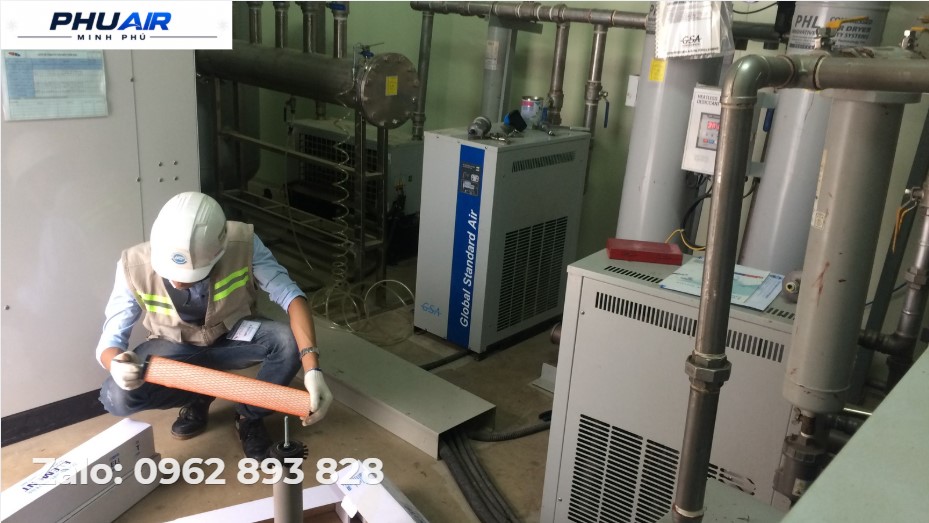
The cost of repairing an air compressor that consumes excessive oil depends on the cause of the oil loss and the actual scope of repair. There is no single price that applies to every machine.
In general, costs should be assessed according to the following categories:
Identified Condition | Potential Work Required | Repair Scope |
|---|---|---|
Oil leaking from a fitting or sealing point | Gasket, seal, or fitting | Localized repair |
Oil leaking from a shaft seal | Seal and related components | Repair or component replacement |
Excessive oil consumption with no identified source | Inspection of the oil system and compression assembly | Diagnosis before quotation |
Excessive oil consumption accompanied by slow pressure buildup | Valves, piston rings, piston, cylinder | More detailed inspection required |
Excessive oil consumption accompanied by blow-by and reduced compressor performance | Sealing performance of the piston assembly | Compressor-head repair may be required |
Persistent excessive oil consumption accompanied by multiple mechanical symptoms | Piston rings, piston, cylinder, and related components | A major overhaul may be necessary |
Therefore, if a service provider immediately quotes a fixed price based only on the statement that “the machine consumes excessive oil,” the customer does not yet have sufficient information to understand which items are included in that cost.
2. Why Can't the Cost of Repairing an Air Compressor with Excessive Oil Consumption Be Quoted Based on Symptoms Alone?
Excessive oil consumption is a symptom, not a specific repair item.
For example, two compressors may both exhibit falling oil levels but have completely different underlying problems.
In the first case, oil is leaking from a gasket or seal. The repair may involve addressing the leak and replacing only the necessary component.
In the second case, the compressor consumes excessive oil while also building pressure slowly, delivering reduced airflow, and showing signs of blow-by. A more detailed inspection of the sealing performance of the piston, piston rings, and cylinder is then required.
PhuAir technical documentation also establishes that when a compressor exhibits reduced compression, slow pressure buildup, and signs of excessive oil consumption, inspection should proceed from external causes to the valves and compression performance before investigating the piston rings, piston, and cylinder.
3. What Does the Cost of Repairing an Air Compressor with Excessive Oil Consumption Include?
Inspection and Diagnostic Costs
The machine's condition must be assessed before repairs begin.
The inspection may include the oil level, oil condition, leak locations, pressure buildup rate, valve condition, signs of blow-by, and any abnormal symptoms affecting the compressor head.
This is an important step because skipping diagnosis can lead to replacing parts based on symptoms without resolving the underlying cause.
Previous PhuAir articles on repair costs also establish that pricing depends not only on replacement parts but also on the scope of inspection, labor, and the actual extent of the work required.
Replacement Parts Costs
The required replacement parts can only be determined after the cause has been identified.
If the fault is at a sealing point, the repair may involve only a gasket or seal.
If inspection confirms that the piston rings can no longer provide adequate sealing, replacement may be necessary.
If the piston or cylinder is affected, the repair scope will be greater, and each component must be assessed before a decision is made.
Therefore, a quotation for piston ring replacement should not be issued based solely on excessive oil consumption.
Disassembly, Labor, and Repair Costs
The cost also depends on the extent of the work.
Repairing an external leak is entirely different from disassembling the compressor head, inspecting the piston, piston rings, and cylinder, replacing components, reassembling the unit, and conducting a test run.
For machines with more complex problems, the quotation should clearly define the scope of work to distinguish repairs to individual components from a major overhaul of the entire compression assembly.
4. When Does an Air Compressor with Excessive Oil Consumption Need Only a Repair?
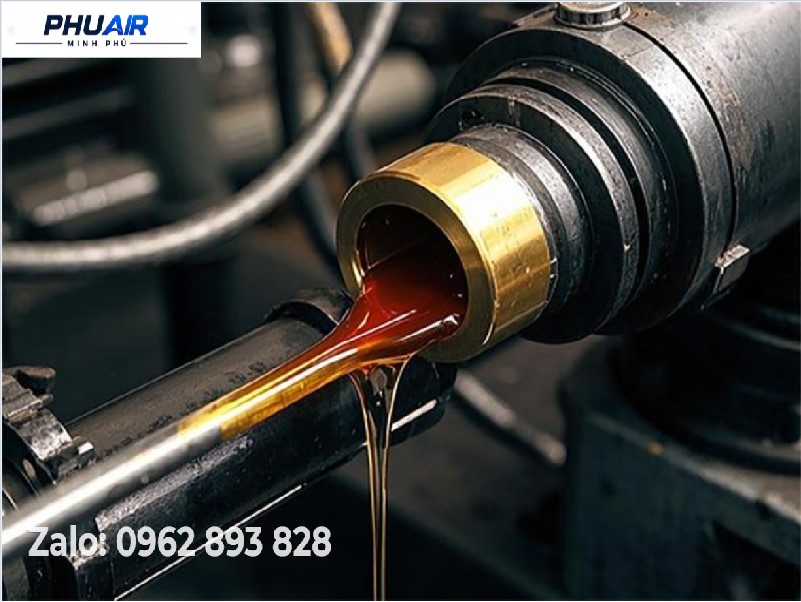
Not every case of excessive oil consumption requires a major overhaul.
If inspection confirms that the cause is a single external oil leak, the compressor maintains normal compression performance, and there are no signs of mechanical damage, the repair can focus on the source of the leak.
For example, if oil appears around a gasket or seal, identify the exact source of the leak before replacing or repairing the relevant component.
After the repair, monitor the oil level and check whether oil continues to appear.
5. When Does an Air Compressor with Excessive Oil Consumption Require Compressor Head Inspection?
A more thorough inspection should be considered when excessive oil consumption occurs alongside multiple other symptoms.
Accompanying Symptom | Diagnostic Significance |
|---|---|
Excessive oil consumption + slow pressure buildup | Compression performance needs to be checked |
Excessive oil consumption + longer running time than before | May indicate reduced operating efficiency |
Excessive oil consumption + gas leaking into the crankcase | Piston/piston ring sealing needs to be checked |
Excessive oil consumption + abnormal overheating | Oil, cooling, and mechanical condition need to be inspected |
Excessive oil consumption + knocking noises | Mechanical components need to be inspected |
Excessive oil consumption + reduced airflow | Compression performance and the condition of the compression assembly need to be assessed |
A single symptom is insufficient to conclude that a major overhaul is necessary. However, when multiple symptoms occur simultaneously, the problem is more likely to extend beyond a simple leak and warrants a more detailed inspection.
6. When Does an Air Compressor with Excessive Oil Consumption Require a Major Overhaul?
A major overhaul should be considered when inspection confirms that multiple critical components of the compression assembly are worn or no longer meet operating requirements, rather than basing the decision solely on the amount of oil consumed.
For a piston air compressor, particular attention should be paid to the condition of the piston rings, piston, and cylinder when excessive oil consumption is accompanied by reduced compression performance.
Piston rings help seal the compression chamber. When the rings become worn or stuck, gas may leak into the crankcase, compression efficiency decreases, and the compressor must run longer to reach the required pressure.
If this condition persists, the compressor may overheat and other components may be affected.
However, concluding that “excessive oil consumption = major overhaul” is premature. Mechanical inspection findings and operating data are needed to determine the actual scope of repairs required.
7. Five Signs That External Oil Leak Repairs Alone May Not Be Sufficient
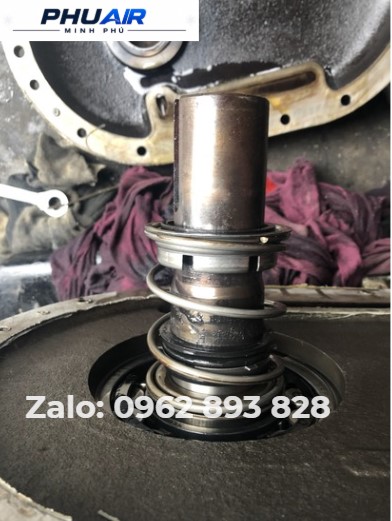
Sign 1: Excessive Oil Consumption Persists Even After the Leak Has Been Repaired
If an external leak has been repaired but the oil level continues to drop, investigate other possible causes rather than continuing to top up the oil.
Sign 2: Pressure Buildup Has Become Noticeably Slower
If the compressor previously reached the required pressure normally but now takes significantly longer, its compression performance should be checked.
The intake valve, discharge valve, piston rings, piston, and cylinder may all be associated with the compressor failing to build pressure or building pressure slowly.
Sign 3: Excessive Oil Consumption Accompanied by Abnormal Overheating
Do not continue operating the compressor for extended periods if it is consuming excessive oil and overheating abnormally before the cause has been identified.
Continued operation under overheating conditions may damage the piston, piston rings, cylinder, or seals.
Sign 4: Knocking Noises or Abnormal Vibration
This is a sign that mechanical inspection should be prioritized. Do not simply change the oil or replace a single sealing component and then continue operating the machine.
Sign 5: Thermal Protection Is Activated
If the compressor's thermal protection has been activated, do not repeatedly reset it to resume operation before identifying the cause.
8. Procedure for Determining Whether an Air Compressor Needs Repair or a Major Overhaul
Step 1: Confirm the Extent of Oil Consumption
Record the current oil level, inspection conditions, and history of oil replenishment.
Do not assess whether oil consumption is excessive based solely on subjective impressions. Collect actual data to compare over time and against the requirements for the specific machine model.
Step 2: Identify the Source of Oil Loss
Inspect locations where external leaks may occur.
If oil is found on the machine housing, identify the origin of the leak rather than simply addressing the area where oil has accumulated.
Step 3: Check Pressure-Building Performance
Monitor the pressure and the time required for the compressor to reach its operating conditions.
If the compressor consumes excessive oil but still builds pressure normally, the inspection approach will differ from that for a compressor experiencing both excessive oil consumption and slow pressure buildup.
Step 4: Inspect the Valves and External Factors
For a piston air compressor, inspect the intake valve, discharge valve, and related components before concluding that the piston rings or piston are faulty.
This approach helps avoid disassembling the compressor head when the actual cause may lie in the valves or air system.
Step 5: Assess the Piston Rings, Piston, and Cylinder
If external causes do not explain the problem and the compressor also exhibits excessive oil consumption, reduced compression, slow pressure buildup, or signs of gas leakage, proceed with a more detailed inspection of the piston assembly.
Only when multiple components are confirmed to be worn and the repair scope is extensive is there a sound basis for considering a major overhaul.
9. How Does a Major Overhaul Differ from Routine Repairs?
Routine repairs generally focus on a specific identified fault or component assembly.
For example, repairing an oil leak at a particular location or replacing a damaged sealing component.
A major overhaul involves a broader scope of work. Its objective is to assess and restore the condition of the compression assembly when multiple components are worn or when repairing individual faults is no longer an appropriate solution.
Therefore, a major overhaul should not be recommended solely because the compressor has been in service for many years or is consuming excessive oil.
The decision must be based on actual inspection findings and the extent of the damage.
Should You Arrange a Major Overhaul as Soon as the Compressor Starts Consuming Excessive Oil?
No.
Excessive oil consumption is a reason to inspect the compressor, not sufficient justification on its own to authorize a major overhaul.
If the cause is simply a leak at a sealing point, a complete compressor-head overhaul may be unnecessary.
Conversely, if the compressor exhibits persistent excessive oil consumption, slow pressure buildup, reduced compression performance, blow-by, abnormal overheating, and signs of mechanical wear, repairing only the external leak may not resolve the underlying problem.
The appropriate approach is to proceed from symptoms → data → inspection → determination of the damage scope → quotation → repair or major overhaul.
How Can You Avoid Overpaying for Air Compressor Repairs?
When reviewing a quotation, the maintenance manager should request the following details:
Required Item | Purpose |
|---|---|
Identified cause | Understand why the machine has failed |
Inspection findings | Establish a technical basis for the diagnosis |
Parts to be replaced | Know exactly what needs replacing |
Parts quantities | Control the scope of work |
Labor costs | Distinguish routine repairs from a major overhaul |
Additional work | Avoid costs without a clearly identified cause |
Post-repair inspection | Confirm that the machine has returned to an appropriate operating condition |
In particular, do not accept a quotation that simply states “air compressor overhaul” without specifying the scope of work and the condition of the components requiring attention.
10. Mistakes That Increase Air Compressor Repair Costs
Replacing the Piston Rings as Soon as Excessive Oil Consumption Is Detected
If the actual cause is an external oil leak, replacing the piston rings will not solve the problem.
Overhauling the Entire Assembly Without Inspection Findings
A major overhaul involves extensive work. A technical basis is needed to establish that it is necessary.
Looking Only at the Price of Replacement Parts
A low-cost quotation that fails to address the actual cause may allow excessive oil consumption to continue, resulting in repeat repairs.
Adding Oil Only to Keep the Compressor Running
If the oil level continues to drop, topping up the oil does not replace the need to identify the cause of the oil loss.
Continuing to Operate the Compressor Despite Multiple Abnormal Symptoms
Excessive oil consumption accompanied by overheating, slow pressure buildup, knocking noises, vibration, or thermal protection activation requires priority inspection. Do not repeatedly reset the protection and restart the compressor.
11. FAQ: Air Compressor Repairs and Major Overhauls for Excessive Oil Consumption
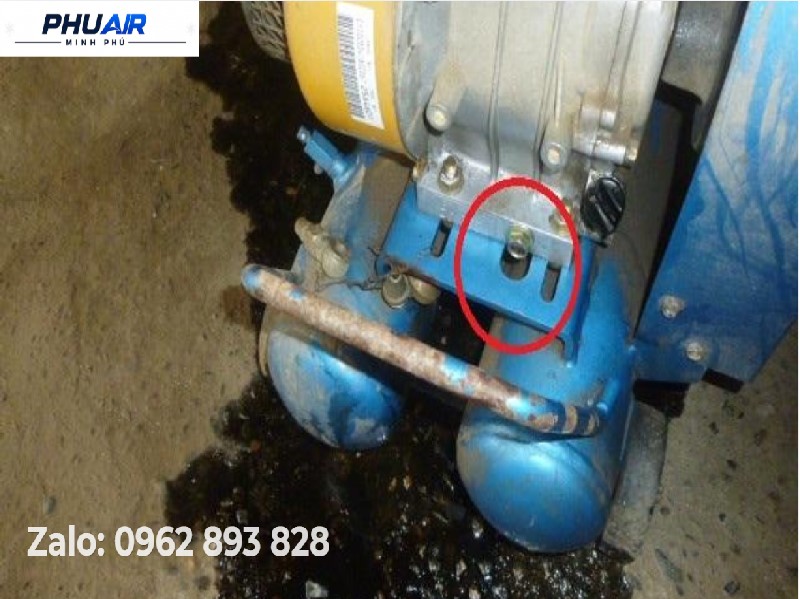
How Much Does It Cost to Repair an Air Compressor That Consumes Excessive Oil?
There is no fixed price. The cost depends on the machine model, configuration, cause of oil consumption, replacement parts required, and actual scope of repair.
Does an Air Compressor That Consumes Excessive Oil Require a Major Overhaul?
Not necessarily. If oil is leaking from a single sealing point and the compression assembly is still operating normally, a localized repair may be sufficient.
How Much Oil Consumption Indicates That a Major Overhaul Is Required?
A major overhaul should not be determined using a single oil consumption threshold that applies to every machine. The assessment must consider the specific model, operating condition, and accompanying symptoms.
If an Air Compressor Consumes Excessive Oil and Builds Pressure Slowly, Do the Piston Rings Need Replacing?
The problem may be related to the piston rings, but there is insufficient evidence to draw that conclusion. The valves, piston, cylinder, and compression performance must also be inspected.
Should an Oil Leak Be Repaired First or Should the Compressor Undergo a Major Overhaul?
The cause must be identified first. If the oil leak is an isolated fault, repairing the leak may be sufficient. If excessive oil consumption is accompanied by reduced compression performance and mechanical damage, a more extensive repair assessment is necessary.
How Can You Determine Whether a Major Overhaul Quotation Is Reasonable?
Request a quotation that clearly specifies the inspection findings, identified causes, list of replacement parts, quantities, labor costs, disassembly and reassembly scope, and post-repair inspection items.
12. Conclusion
There is no single price for repairing an air compressor that consumes excessive oil. The cost depends on the cause of oil consumption, machine model, replacement parts required, and scope of work.
More importantly, excessive oil consumption does not necessarily mean that a major overhaul is required.
If oil is leaking only from a gasket, seal, or external location, a localized repair may be sufficient. However, if excessive oil consumption is accompanied by slow pressure buildup, reduced compression performance, blow-by, abnormal overheating, knocking noises, or signs of wear on the piston, piston rings, or cylinder, a more thorough inspection is needed to determine whether compressor-head repair or a major overhaul is necessary.
PhuAir prioritizes identifying the cause and extent of damage before recommending replacement parts or a major overhaul, giving customers a clear technical basis for controlling repair costs and avoiding unnecessary or incorrect repairs.
If your compressor is consuming excessive oil, requiring frequent oil replenishment, or has already been diagnosed as needing a major overhaul, you can provide the machine model, power rating, photos of the machine, oil consumption symptoms, and any other observed abnormalities to help PhuAir determine the appropriate inspection steps.