

How to Check an Air Compressor That Will Not Start Before Calling a Technician
Your Monday morning production shift is suddenly interrupted because the air compressor system will not start and remains completely unresponsive after pressing the operating button. For precision mechanical component or textile manufacturing plants, every hour of downtime can result in significant costs from idle labor and delayed orders.
In a panic, many people instinctively press the START button repeatedly. These are extremely damaging technical mistakes! Attempting to force the machine to start before releasing residual pressure or while the electrical power system is experiencing a fault can cause the main motor to burn out, damage the power electrical cabinet, or damage the Airend assembly.
Before picking up the phone to call for emergency repair service, immediately perform the safe inspection procedure below to accurately identify the fault and avoid incorrect intervention that could result in additional costs.
1. Quick Answer (Quick Answer)
When an air compressor will not start, the most important initial step is to compare the values displayed on the control screen with the status of the power supply network. The initial causes that should be checked typically include the power supply, operating mode, and safety interlock conditions, such as: the emergency stop button (E-STOP) being locked, the thermal overload relay (Overload Trip) being triggered due to voltage fluctuations, the incoming power cable phase sequence being reversed (Phase Reversal), or residual pressure in the system not yet being released to the permitted condition.
Plant operators can handle basic issues themselves, such as releasing the emergency stop button or observing the fault code on the display. Any in-depth intervention, such as isolating the power supply, opening the electrical cabinet, or inspecting the electrical circuit, must be performed by trained and authorized personnel.
2. Quick Diagnostic Reference Table Before Calling a Technician
Actual Recognizable Symptom | Display Status | Suspected Technical Cause | On-Site Corrective Action |
|---|---|---|---|
The main motor is completely unresponsive, and the LCD control display is not illuminated. | Display is completely dark, and the power indicator is off. | Loss of the main power supply, blown control circuit fuse, or transformer failure. | Check the main power circuit breaker; measure the control circuit voltage; call a technician to replace the protection fuse if it has blown. |
The display is operating normally, but the machine cannot be started by pressing the button. | Fault code displayed: EMERGENCY STOP or ESTOP. | The red emergency stop button (E-STOP) is mechanically locked in the pressed position. | Turn the E-STOP button clockwise to release the mechanical contact, then press the RESET button on the control panel. |
The main motor is completely silent, and a newly installed air compressor will not run. | Fault code displayed: PHASE REVERSAL or phase sequence fault. | The phase sequence of the incoming power cables has been reversed. | Stop the operation and notify an electrical technician to inspect and correct the phase sequence in accordance with the applicable safety procedure. |
The motor produces a loud humming sound, then the thermal relay immediately trips and cuts off the power. | Fault code displayed: OVERLOAD or motor overload. | Abnormal power supply, motor overload, or a mechanical issue. | Do not repeatedly attempt to restart the machine; notify a technician to measure the current and inspect the mechanical system. |
The pressure in the distribution system drops significantly, but the machine remains stopped and does not automatically restart. | Pressure fault code or standby status displayed. | Residual pressure in the oil separator vessel/air line has not been released to the permitted condition, depending on the machine design and configuration. | Wait for the system to automatically release the pressure; do not remove or open equipment yourself before the pressure has been safely released. |
3. Technical Explanation: The Nature of the Starting Process
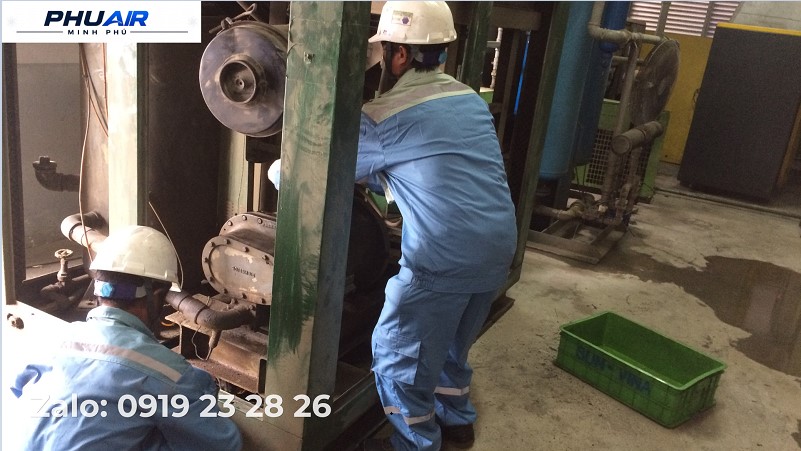
The starting sequence of an industrial screw air compressor typically uses an appropriate electrical connection circuit to limit peak starting current. When the START button is pressed, the controller performs a system self-check before closing the power supply relay.
However, the safety interlock circuit will immediately interrupt the control current if it detects any operating parameter exceeding the designed safety threshold.
Fault condition caused by residual pressure (Backpressure): In some configurations, residual pressure that has not been released may prevent the start conditions from being satisfied or increase the load during startup. The protection method and warning code depend on the design of each machine and are intended to prevent the risk of excessive starting current.
4. On-Site Safety Inspection Procedure (Tiered Responsibilities)
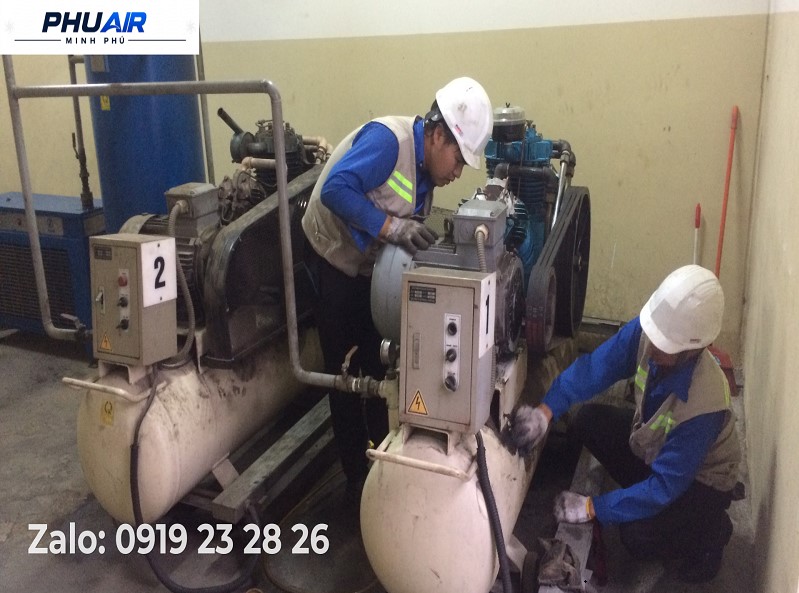
To ensure maximum safety, inspection responsibilities should be clearly divided between the operator and authorized technicians:
Operators (External Visual Inspection):
Observe the status of the control display and record the Alarm/Fault code, if any.
Check whether the emergency stop button (E-STOP) is activated.
Check for external signs such as a burning smell or other abnormalities around the machine.
Authorized Technicians (In-Depth Technical Intervention):
If power isolation, electrical cabinet opening, or equipment intervention is required, it must be performed by trained and authorized personnel in accordance with the plant's LOTO procedure.
Perform a visual inspection of the exterior of the electrical cabinet and wiring; measure voltage and continuity and troubleshoot in-depth electrical and mechanical faults in accordance with the manufacturer's technical documentation.
5. Operating Mistakes That Require Special Attention (Warnings)
⚠️ Be especially alert to the risk of unexpected automatic restart (Auto Restart): When the compressor is configured for automatic unload/stop operation to save energy, the equipment may unexpectedly restart without the need to physically press the START button when the pressure in the compressed air distribution network drops. Always switch off the main power circuit breaker before approaching any moving components.
⚠️ Never remove or bypass safety protection relays: Any unauthorized bypassing of protection contacts, thermal protection, or removal of electrical protection devices is strictly prohibited. Forcing the machine to run by bypassing safety interlocks can severely damage the equipment and create a risk of electrical short circuits and fire.
6. Frequently Asked Questions (FAQ)
What should be checked first when an air compressor will not start but displays no fault code?
Check the main power supply to the machine and the status of the circuit breaker, make sure that the emergency stop button (E-STOP) is not activated, and verify whether the machine is operating in automatic (Auto) or manual (Manual) mode.
What insulation resistance value of the motor winding is considered safe for energizing the power circuit?
There is no single value that applies to every motor. The test voltage and insulation resistance evaluation criteria must be determined according to the rated voltage, motor type, applicable standards, and manufacturer's instructions.
When should a technician be called instead of performing a self-inspection?
A technician should be called when the machine repeatedly displays an Alarm/Fault, the CB or protection device continues to trip, there are signs of burning or electrical abnormalities, a motor or Airend fault is suspected, or the electrical cabinet needs to be opened for in-depth measurements.
7. Conclusion
Any electromechanical intervention or forced fault reset on an air compressor electrical cabinet without first clearly identifying the cause carries a risk of overload, short circuit, and damage to the main motor.
👉 Take a clear photo of the air compressor nameplate (Model/Serial), a photo of the displayed fault code, and send them to PhuAir via Zalo. Our experienced electromechanical engineering team will help you review the power wiring diagram, guide you through continuity checks, and recommend a cost-effective solution for optimizing plant operation.