

How Much Does It Cost to Repair an Air Compressor That Runs Continuously? What Factors Affect the Cost?
“How much does it cost to repair an air compressor that runs continuously?” is a common question asked by factory owners and technical managers when they discover that a compressor has to operate for extended periods but does not reach its normal operating state.
However, there is no fixed price for an air compressor that runs continuously. The same symptom can have completely different causes. If the problem is related to air leaks, a sensor, or a control valve, the required repair may be relatively straightforward. Conversely, if the compressor's performance has genuinely deteriorated or the Airend assembly has experienced wear, the repair can be considerably more complex and costly.
Therefore, instead of simply asking, “How much will the repair cost?”, it is necessary to first determine whether the compressor runs continuously because it cannot reach the required pressure or because the control system fails to switch load states as designed. This provides the basis for technicians to identify the likely cause and quote for the appropriate repair items.
1. What Factors Affect the Cost of Repairing an Air Compressor That Runs Continuously?
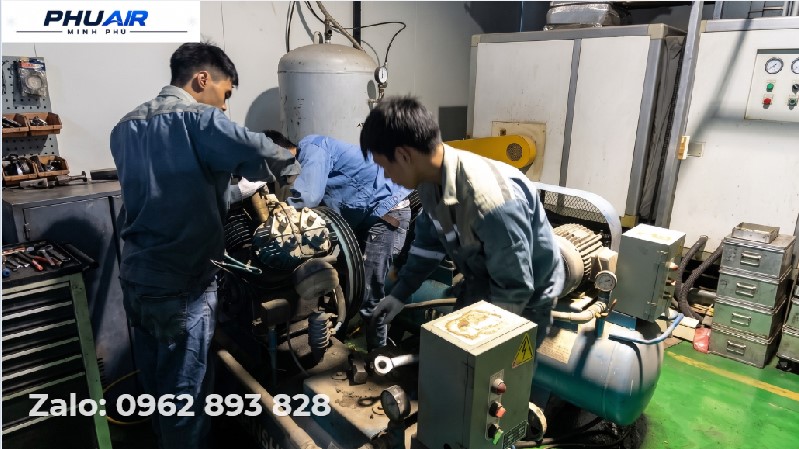
Repair costs are generally determined by three main factors: the cause of the issue, the components requiring attention, and the actual extent of the damage.
If the problem is limited to air leaks in the piping or at certain connection points, technicians can focus on locating the leaks and addressing the relevant components. If the cause is related to a sensor or control valve, the cost will depend on the component type, machine model, and whether the component can be inspected and restored or must be replaced.
In more complex cases, such as problems involving the Inlet Valve assembly, Minimum Pressure Valve (MPV), or control system, technicians must inspect the machine's specific configuration before determining the appropriate repair approach.
In particular, you should not assume that a compressor running continuously requires Airend repair or overhaul. This is generally one of the items to be evaluated after ruling out causes related to the compressed air system, controls, and auxiliary components.
Cause Category | Potential Repair Items |
|---|---|
Locate leaks, repair connections, and replace hoses or fittings if necessary. | |
Pressure Sensor | Check the signal and sensor condition, and replace the sensor when necessary. |
Solenoid Valve | Inspect the coil and valve, and check control functionality. |
Air Filter and Oil Separator | Inspect filter condition and replace according to the actual condition and the manufacturer's recommendations. |
Inlet Valve | Inspect the valve mechanism, clean it, or replace the appropriate repair kit. |
Minimum Pressure Valve (MPV) | Inspect, restore, or replace the valve according to its actual condition. |
Control System | Inspect relays, control signals, circuit boards, or the PLC, depending on the configuration. |
Reduced Airend Performance | Assess performance, inspect for wear, and carry out repairs or an overhaul when justified by the findings. |
The categories above are for general classification purposes only and do not represent a fixed price list. Actual repair costs must be determined based on the machine model, spare parts used, extent of damage, labor, and scope of work.
2. Why Do Repair Costs Differ Even When Air Compressors Have the Same Continuous-Running Problem?
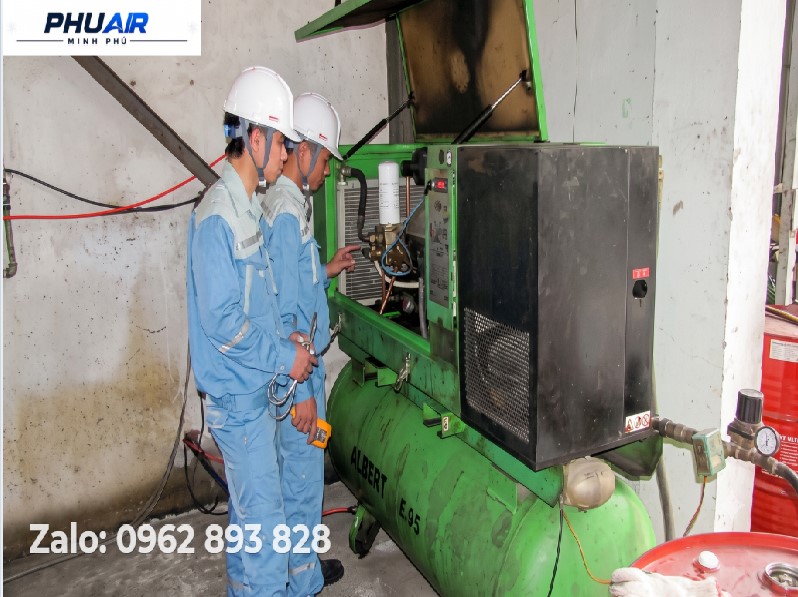
The phrase “the compressor runs continuously” describes only the observable symptom. To determine the repair cost, it is necessary to understand the operating conditions under which the compressor runs continuously.
The Compressor Runs Continuously but Still Reaches the Required Pressure
One situation that requires attention is when the compressor has reached the set pressure range but continues operating under load or fails to switch to the appropriate operating state as designed.
In this case, the cause may be related to the pressure sensor, control system, solenoid valve, Inlet Valve, or other load-control components. However, the faulty component cannot be identified accurately based solely on the symptom “the compressor does not shut down automatically.”
The appropriate inspection method is to compare the set pressure, actual pressure, LOAD/UNLOAD status displayed on the controller, and any alarm codes. Technicians can then narrow down which systems require inspection.
The Compressor Runs Continuously but Fails to Reach the Required Pressure
The second situation occurs when the compressor remains in the loaded state for an extended period, but the pressure continues to rise slowly or fails to reach the required level.
In this case, both the compressor itself and the air-consuming system must be considered. Pipeline air leaks, increased air demand, pressure drops across the system, unsuitable control settings, or a malfunctioning compressor component can all increase running time.
If external causes have been checked and ruled out, technicians can then carry out a more detailed assessment of the filters, valves, control system, and Airend performance.
This also explains why two factories reporting the same issue—“the air compressor runs continuously”—may face very different repair costs.
3. When Should the Airend Be Inspected?
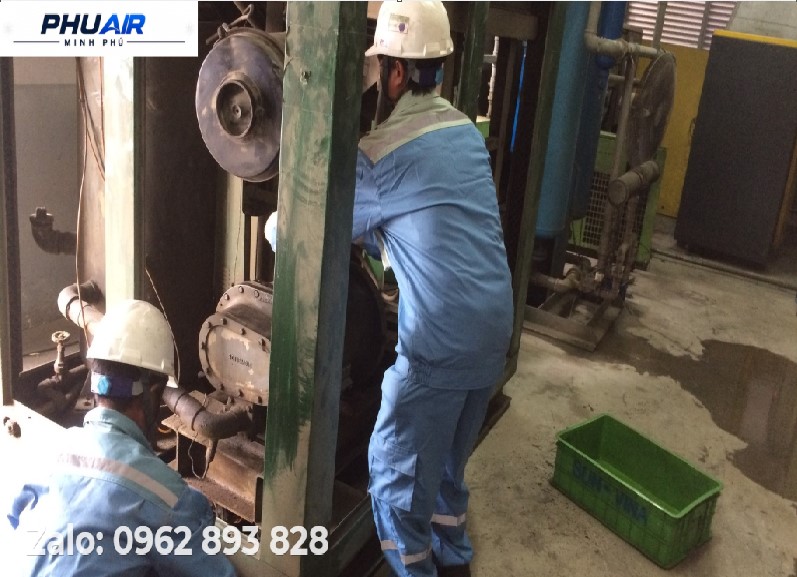
The Airend is generally one of the more expensive components to repair, so a conclusion should not be drawn based solely on the fact that the compressor runs for a long time.
If the compressor fails to reach the required pressure, the actual operating conditions should be examined first. Is the factory using more air than usual? Are there any air leaks? Have the air-consuming devices changed? Is there a significant pressure drop across the piping system?
Only after these factors have been checked should technicians assess the possibility of reduced compressor performance.
For a screw air compressor, the assessment may involve the condition of the Airend, intake system, control valves, filters, and operating parameters. A single symptom should not be used as the sole basis for concluding that the Airend requires a major overhaul.
For a piston air compressor, the inspection approach will be different and may involve the intake/discharge valves, piston rings, cylinders, or other components, depending on the machine design.
Therefore, the machine model and specific configuration are essential information when assessing repair costs.
4. How Can You Get a More Accurate Air Compressor Repair Quotation?
To reduce the need for repeated inspections and help technicians identify the fault more quickly, customers should provide the actual machine information from the outset.
The most important information includes the manufacturer, model, power rating, and Serial Number. A photo of the machine nameplate is often the quickest way to provide these details.
Next, describe the machine's current status. If the controller displays LOAD, UNLOAD, or an alarm status, take a photo of the screen. If the machine has an error code, provide the exact code rather than describing the issue simply as “machine fault.”
Pressure readings should also be recorded on both sides: set pressure and actual pressure. These two pieces of information help technicians better distinguish between a machine that is failing to switch operating states and one that is running longer because it cannot meet the system's air demand.
A short video showing the control screen while the machine is running can also be very useful. If possible, include the pressure gauge and any abnormal operating sounds. However, there is no need to remove machine covers or approach electrical or mechanical components while the equipment is running.
5. Should You Continue Operating an Air Compressor That Runs Continuously Abnormally?
You should not allow the machine to continue operating for an extended period without identifying the cause if it shows clear signs of abnormal operation.
Depending on the cause and configuration, prolonged operation under load may increase electricity consumption and operating temperature or place additional stress on related components.
If the machine displays a high-temperature alarm, abnormal pressure, excessive noise, severe vibration, significant leakage, or other unsafe conditions, stop operation in accordance with the manufacturer's procedures and carry out the appropriate inspection.
For work involving electricity, pressure, or internal disassembly, energy isolation and safety procedures must be followed in accordance with the manufacturer's instructions. Operators should not remove valves, sensors, or internal components themselves merely to troubleshoot the fault.
6. How Does PhuAir Provide Air Compressor Repair Quotations?
An accurate repair quotation should not be based solely on the fault description “the compressor runs continuously.”
PhuAir can review preliminary information from photos, videos, and machine parameters to help identify possible causes. For cases requiring more detailed inspection or an on-site factory assessment, the scope of work and inspection costs will be discussed before the work begins.
Once the cause has been identified, the repair proposal should clearly specify the required repair items, related spare parts or materials, and scope of work. This helps customers understand which items they are paying for, rather than receiving only a total figure without knowing the actual cause.
For faults potentially involving the Airend, control board, or high-value components, inspecting the machine and confirming the cause before replacing parts is particularly important.
7. Frequently Asked Questions
Does an Air Compressor Running Continuously Mean the Airend Is Faulty?
Not necessarily. Continuous operation may result from air demand, system leaks, operating conditions, control settings, or issues with sensors and valves. The Airend should only be assessed after other relevant causes have been checked.
Is It a Fault If the Compressor Runs Continuously but Still Maintains Sufficient Pressure?
It may indicate abnormal operation, but the machine's design and control logic must be considered. The set pressure, actual pressure, LOAD/UNLOAD status, and control configuration of the specific compressor model should be checked before drawing a conclusion.
Is It Expensive to Repair a Compressor That Runs Continuously but Cannot Build Sufficient Pressure?
The cost cannot be determined from this symptom alone. Repair costs may be low if the cause is an air leak or an auxiliary component, but they may be higher if the problem involves the control system or reduced Airend performance. Diagnosis is therefore necessary before providing a quotation.
Can a Repair Quotation Be Provided Based on Photos Alone?
In some cases, photos of the machine nameplate, controller screen, and a video of the symptoms can help technicians identify possible causes and recommend an initial course of action. However, an on-site inspection may be required to determine the exact extent of the damage or examine internal components.
CONSULT PHUAIR FOR AIR COMPRESSOR REPAIR SERVICES
If your air compressor is running continuously, before deciding to replace components or overhaul the Airend, first determine whether the compressor is running continuously because it cannot reach the required pressure or because the control system is failing to switch operating states correctly.
You can send PhuAir a photo of the machine nameplate, Serial Number, photo of the controller screen, set/actual pressure readings, and a short video showing the symptoms.
Using this information, the technical team can help identify possible causes and determine which items need to be inspected before recommending a repair solution.