

Screw Air Compressor Fails to Start: 10 Common Causes & Solutions
Article reviewed by the PhuAir Technical Department - Updated: 07/09/2026
It is time for the production shift to begin. You press the START button on the control panel, but the screw air compressor does not operate at all, the control display is completely dark or shows a fault, and the main motor does not rotate. This is a sudden interruption of the compressed air supply that can bring the entire factory production line to a standstill, resulting in significant costs and downtime.
So why does the air compressor fail to start? Is it due to a power supply failure, a faulty thermal relay, or an issue with the central controller? The following article breaks down the 10 most common causes and the safe on-site diagnostic sequence, focusing on faults specific to screw air compressors. If your machine is a different type or you want an overview of all causes that can prevent an air compressor from running, you can also refer to the article [Air Compressor Will Not Run: Causes and Inspection Methods].
Quick Answer
An air compressor that fails to start is commonly caused by three main groups of issues:
- Power supply and safety protection system faults: phase loss, circuit breaker trip, activation of the emergency stop mechanism, or thermal overload relay trip.
- Faults in the power circuit switching mechanism: a burned contactor coil or loose contacts.
- Central controller or safety sensor faults: temperature/pressure sensors exceeding protection thresholds or control signal faults.
Before opening the electrical cabinet or performing circuit measurements, the technician must completely disconnect the main power supply and apply lockout/tagout (LOTO) to prevent dangerous electrical shock accidents.
Quick Diagnostic Summary Table
Symptoms | Suspected Technical Component | Initial Inspection & Troubleshooting |
|---|---|---|
Display is completely dark; pressing Start produces no response. | Loss of incoming power, blown power fuse, or tripped main MCCB. | Check the main circuit breaker and measure the incoming voltage to the electrical cabinet using a multimeter. |
Alarm/Trip indicator is illuminated red; the machine refuses to run. | Thermal Relay has tripped or temperature/pressure sensor fault. | Check whether the thermal relay has tripped due to overload; reset the thermal relay after the machine has cooled down. |
A light "click" is heard from the electrical cabinet when Start is pressed, but the motor does not rotate. | Contactor coil is burned out or the main contacts are faulty. | Check the continuity of the contactor coil; replace the contactor if the contacts are stuck or burned black. |
The motor attempts to start but stalls, then power is suddenly interrupted with a humming noise. | Mechanical fault in the airend or drive system. | Check whether the drive system can rotate according to the applicable technical procedure. |
The display reports an emergency stop fault. | The red mushroom emergency stop button is locked in the press-lock position. | Pull or rotate the emergency stop button in the direction of the arrow to release it, then press Reset on the control panel. |
Inspection Responsibility Levels (Operator vs. Technician)
To ensure safety and optimize troubleshooting time, the inspection process is divided into two clearly defined levels:
1. Operators Can Check:
Does the machine have a power supply? Is the display illuminated?
Is the emergency stop button activated?
Is there any warning (Alarm/Trip) displayed on the screen?
Has the circuit breaker (CB) tripped?
2. Qualified Technicians Should Perform:
Detailed voltage measurements.
Inspection of contactors, relays, and control circuits.
Inspection of the motor and drive system, and evaluation of insulation resistance.
Top 10 Detailed Causes of an Air Compressor Failing to Start
1. Loss of Incoming Power or Tripped Main Circuit Breaker
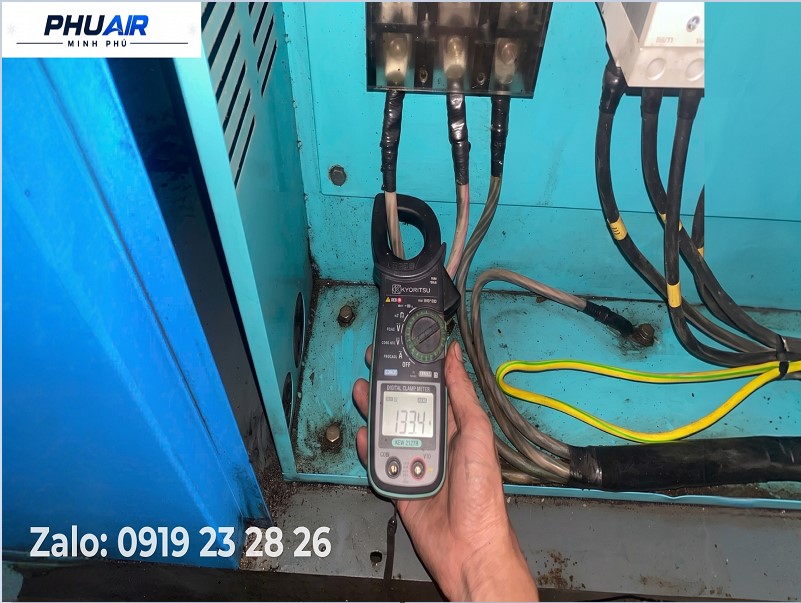
Cause: The factory power supply experiences a sudden voltage drop, phase loss, undervoltage, or a supply voltage that does not meet the manufacturer's requirements (for example, a three-phase system depending on the applicable standard and machine model), or the main circuit breaker (MCCB) in the electrical cabinet trips due to excessive starting current.
Troubleshooting: Use a multimeter to measure the voltage at the air compressor electrical cabinet input and ensure that the power supply is within the equipment's permissible range.
2. Emergency Stop Mechanism Is Activated
Cause: The red mushroom-type emergency stop button on the electrical cabinet has been pressed and locked in position. The control system will place the machine in a safe stop state and prevent a start command until the safety condition is restored.
Troubleshooting: Check the emergency stop button and gently rotate it in the direction of the arrow to release it to its original position, then press the Reset button on the control panel.
3. Thermal Relay Trips Due to Motor Overload
Cause: The main motor is operating under overload, the operating current exceeds the rated current due to mechanical seizure, or the protection current setting on the thermal relay is incorrect.
Troubleshooting: Check the thermal relay contacts. If the relay has tripped, identify the cause of the overload before pressing the Reset button. Never arbitrarily increase the rated current beyond the specifications stated on the motor nameplate.
4. Contactor or Intermediate Relay Fault
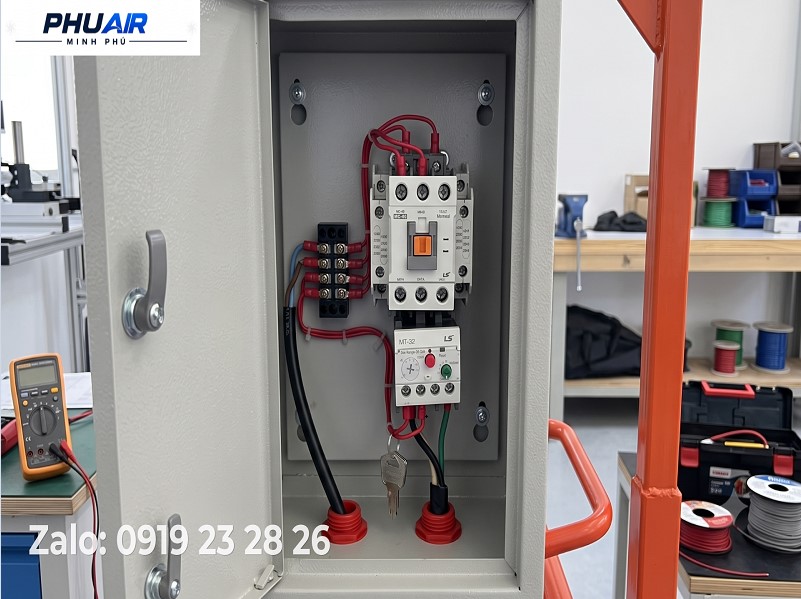
Cause: The contactor is responsible for switching the power supply to the main motor. After prolonged operation, the contactor coil may burn out or break, or the contacts may become oxidized or contaminated with carbon deposits, preventing proper electrical conduction.
Troubleshooting: Use a meter to measure the resistance of the contactor coil. If the coil is open-circuit or the internal contacts are severely stuck or pitted, replace the contactor with a new one having the correct current (Ampere) rating.
5. Temperature or Pressure Sensor Exceeds the Safety Threshold
Cause: If the air compressor previously stopped suddenly due to overheating or the system pressure remains high (not fully discharged), the controller may automatically lock the control circuit and prevent the operator from restarting the machine.
Troubleshooting: Check the actual machine temperature and allow the machine to cool down. Confirm that the system pressure has been discharged to a safe level according to the manufacturer's instructions before inspection or intervention.
6. Central Controller (Micom/PLC/Controller) Fault
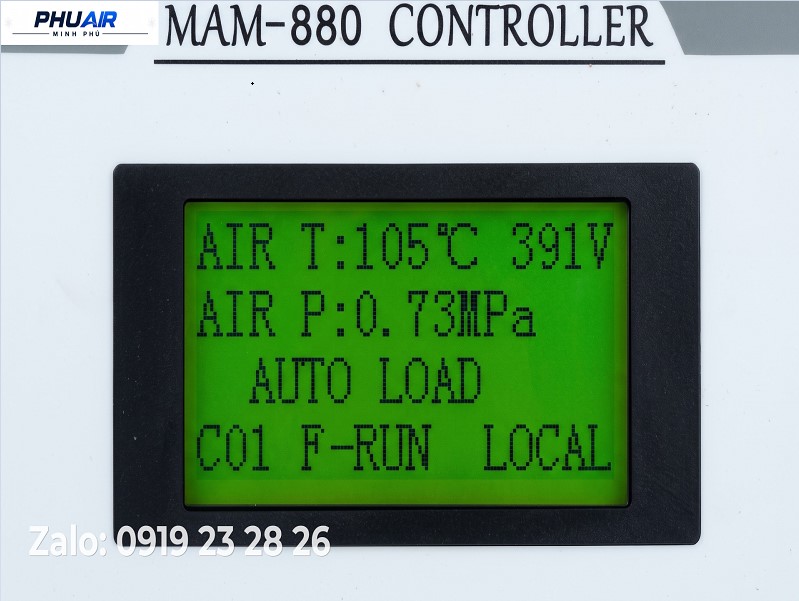
Cause: The electronic controller is affected by the operating environment, suffers from moisture-related damage or short-circuit/burnout, or has a software fault that prevents the Start command signal from being transmitted to the power circuit. (For example, if the machine uses a Micom controller, check the fault code and control signals according to the documentation for the corresponding model.)
Troubleshooting: Check the power supply to the controller and inspect the signal connectors for looseness or oxidation.
7. Cabinet Door Limit Switch or Safety Switch Failure
Cause: Many industrial screw air compressor models are designed with a safety switch installed on the enclosure door. If the machine door is not fully closed or the switch is faulty, the electrical control circuit will be interrupted.
Troubleshooting: Check that all air compressor enclosure doors are securely closed; use a meter to check the open/closed status of the safety switch.
8. Airend or Drive System Mechanically Seized
Cause: An airend with excessive shaft resistance, failed bearings, or other mechanical issues may prevent the motor from rotating or cause starting current to increase, resulting in a protection relay trip.
Troubleshooting: A qualified technician should inspect the machine according to the manufacturer's specified procedure before determining the cause. (If the machine is old and overhaul costs are high, consider a cost analysis as discussed in the article [Air Compressor Does Not Build Pressure: Should You Repair It or Replace It?].)
9. Control Fuse Blown or Control Transformer Fault
Cause: The control circuit uses a lower voltage supplied through a small control transformer. When a minor short circuit occurs, the protective fuse will blow to interrupt the current.
Troubleshooting: Check the fuse box inside the electrical cabinet and replace the fuse with one of the correct Ampere rating if the fuse element is found to be blown.
10. START Button Contact on the Keypad Is Faulty
Cause: After prolonged operation, the Start button contact on the control panel may become worn or lose its spring action, so pressing the button does not close the signal circuit.
Troubleshooting: Check continuity directly at the terminals on the back of the control keypad. Replace the keypad or button if the contact has failed.
Safe On-Site Inspection Procedure (5-Step SOP)
When an air compressor fails to start, maintenance technicians must strictly follow the following five-step safety procedure:
Step 1 - Disconnect Power and Apply LOTO: Activate the safe shutdown mode, disconnect all main circuit breakers supplying power to the compressor, and post a maintenance warning sign to prevent anyone else from inadvertently restoring power.
Step 2 - Check the Main Power Supply: Use a meter to measure the incoming voltage at the electrical cabinet and confirm that the power supply meets the manufacturer's requirements, with no phase loss or voltage drop.
Step 3 - Check the Mechanical Protection System: Open the electrical cabinet and inspect the status of the thermal relay, fuses, and contactor. Gently press the mechanism by hand to check whether it is stuck.
Step 4 - Check the Drive System (Under Professional Supervision): After completely isolating the power supply, releasing the pressure, and confirming that the machine is in a safe condition, a qualified technician may check the ability of the drive system to rotate according to the manufacturer's instructions.
Step 5 - Reset and Test Run: After the cause has been resolved, close the circuit breaker, clear the fault (reset) on the control panel, and perform a supervised loaded test run while monitoring the current.
Frequently Asked Questions About an Air Compressor That Fails to Start
The air compressor makes a "humming" noise from the electrical cabinet when Start is pressed but does not run. What is the problem?
This condition is commonly caused by a voltage drop in the contactor's control power supply, a weak contactor coil that does not have enough force to fully close the contacts, or one of the power phases being lost. The power supply should be disconnected and the system inspected immediately to prevent the motor winding from burning out.
The air compressor displays an "Overload" fault. What should be done?
An overload fault occurs when the current flowing through the motor exceeds the configured threshold. Check whether the thermal relay has tripped, check the viscosity and level of the lubricating oil, and inspect the drive mechanism for excessive shaft resistance or seizure. Do not repeatedly press Reset to restart the machine, as this may cause the motor stator winding to burn out.
What should be checked first when an air compressor has no power?
Check the main circuit breaker (MCCB), power fuses, the status of the emergency stop button, and the power connectors entering the electrical cabinet to determine whether they are loose or whether the incoming voltage is absent.
Why does an air compressor stop while running and then fail to restart?
This is commonly caused by the machine reaching a safety protection threshold, such as overheating, excessive current, an inverter fault, or discharge pressure not having returned to the permissible level. The system will lock the start command until the required safety conditions have been restored.
What is the difference between an air compressor that fails to start and an air compressor that will not run?
These are two ways of referring to the same group of conditions - the machine cannot start when the Start button is pressed. This article focuses in depth on 10 causes specific to screw air compressors, while the article [Air Compressor Will Not Run: Causes and Inspection Methods] provides a more general overview covering multiple types of machines. You can refer to both articles for a more comprehensive understanding.
Air Compressor Electrical Cabinet Repair & On-Site Startup Services
An air compressor startup failure can completely bring a factory's production system to a standstill. If the internal maintenance team has completed the basic inspection steps but still cannot identify the cause of the electrical cabinet or control board fault, contact PhuAir immediately.
👉 Do not allow prolonged downtime to result in significant losses! Take a photo of the air compressor nameplate and fault display, or record a short video of the electrical cabinet, and send it to PhuAir via Zalo. Our experienced electrical and automation engineers will help narrow down the cause, advise on the appropriate inspection solution, and provide on-site emergency inspection and troubleshooting services in Hanoi, Bac Ninh, Hung Yen, Vinh Phuc, Hai Duong, and nearby industrial parks.