

Air Compressor Excessive Oil Consumption: Causes and Solutions
Excessive oil consumption in an air compressor is often identified when the oil level drops rapidly, oil needs to be added repeatedly, or oil appears in the compressed air lines. However, a falling oil level does not necessarily mean that a specific component is responsible.
Oil may leak externally, be carried along with the compressed air, or be consumed due to the condition of the oil system and the machine's internal mechanical components. Therefore, before replacing a filter or oil separator assembly or dismantling the compressor head, it is necessary to determine where the oil is being lost and what accompanying symptoms the machine exhibits.
For screw air compressors, particular attention should be paid to the oil system, oil separator assembly, oil return line, and cooling conditions. For piston air compressors, in addition to the oil condition and external leaks, the piston rings, piston, and cylinder should also be examined if the symptoms indicate a possible problem.
1. What Are the Signs of Excessive Oil Consumption in an Air Compressor?
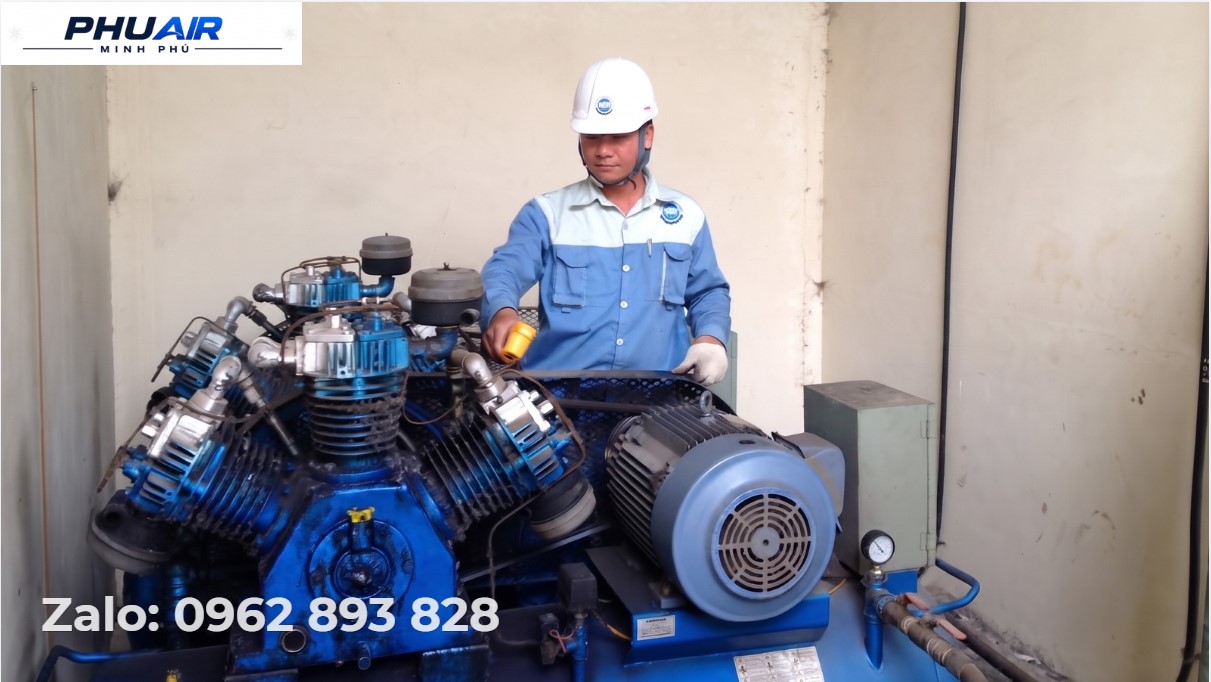
The most noticeable sign is that the oil level drops faster than expected under normal operating conditions. Operators may find that oil needs to be added more frequently or that the amount of oil required has increased compared with previous periods.
Another possible sign is the presence of oil in the compressed air lines. If the amount of oil carried along with the air increases abnormally, the oil separation system and related components should be inspected rather than simply continuing to top up the oil.
In addition, if the machine consumes excessive oil while also operating at a high temperature, running for longer periods, or exhibiting other abnormal symptoms, the diagnosis should consider multiple factors simultaneously.
Observable Symptom | Data to Verify | Inspection Approach |
|---|---|---|
Oil level drops rapidly | Amount of oil added and operating hours | Check for leaks and investigate possible oil consumption |
Oil appears on the outside of the machine | Location where oil appears | Clean the area and identify the leak point |
Oil is present in the air lines | Location and extent of oil carryover | Inspect the oil separation system and air lines |
Excessive oil consumption accompanied by high temperature | Temperature, cooling conditions, and oil condition | Inspect the cooling system and oil |
Piston compressor consumes oil and has reduced pressure-building performance | Pressure buildup rate and compressor head condition | Inspect the valves, piston rings, piston, and cylinder when justified by the symptoms |
Oil consumption continues after an oil change | Oil type, oil quantity, and original cause | Reinspect the entire system rather than simply continuing to add oil |
2. Why Do Air Compressors Consume Excessive Oil?
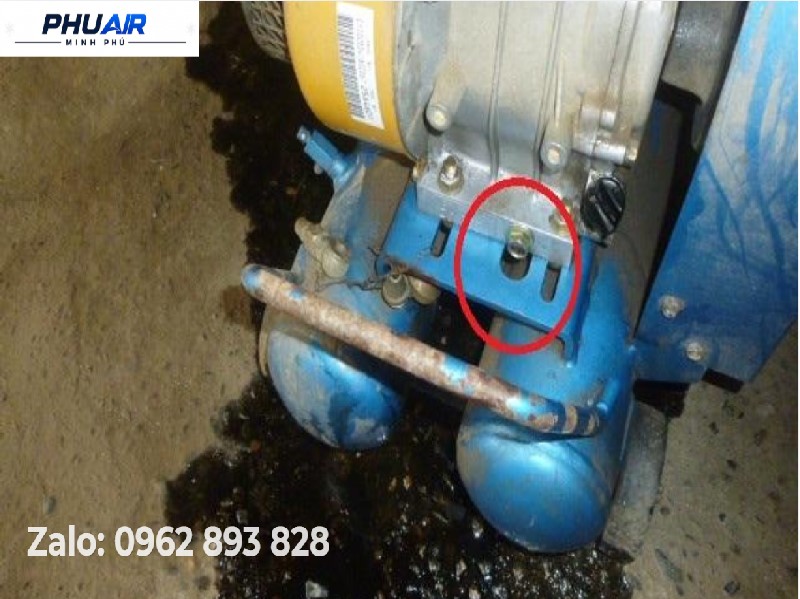
Diagnosis can begin by considering three main possibilities: oil leaking externally, oil being carried along with the compressed air, or oil being consumed due to the machine's operating conditions and mechanical condition.
This classification is important because each situation requires a different inspection approach. If oil is leaking from a connection but the oil separator assembly is replaced instead, the problem will remain unresolved. Conversely, if oil is genuinely being carried into the compressed air but only external oil stains are inspected, the root cause may be overlooked.
- Oil Leaking from the Outside of the Machine
This is one of the first causes that should be checked because it can be observed directly.
Oil may appear around oil lines, connections, gaskets, seals, or certain system connection points. In industrial environments, dust and dirt can accumulate on the oil, making the leak location difficult to identify if the machine has been operating for an extended period.
When oil is found on the outside of the machine, do not immediately conclude that a particular component has failed. A practical inspection method is to clean the suspected area, operate the machine under appropriate conditions, and then inspect it again to identify where oil reappears.
Once the leak location has been confirmed, there is a basis for deciding whether to retighten the connection, replace a gasket or seal, or repair the relevant component.
- Oil Being Carried Along with the Compressed Air
If there are no obvious signs of external oil leakage but the oil level continues to decrease, consider the possibility that oil is being carried along with the compressed air.
In oil-injected screw air compressors, the oil separator assembly separates oil from the air-oil mixture after compression so that the oil can continue circulating through the system. If oil separation performance or the oil return system is impaired, the amount of oil carried into the compressed air may increase.
When oil is detected in the air lines, determine where it appears and how severe the condition is. The air receiver, piping, filters, and air treatment equipment can be inspected for signs of abnormalities.
Do not assume that the oil separator assembly must be replaced immediately whenever oil is found in the air lines. The machine's actual condition and the relevant components should be assessed before making a decision.
- The Oil Filter and Oil Separator Assembly Need to Be Inspected
For screw air compressors, the oil system contains several components involved in oil circulation and separation. Therefore, when excessive oil consumption occurs, the oil filter, oil separator assembly, and oil return line should all be considered in accordance with the design of the specific model.
A clogged oil filter may affect oil circulation conditions. An improperly functioning oil separator assembly may also increase the amount of oil carried into the compressed air.
However, the condition of each component must be verified against the machine's specifications and technical documentation. The same differential-pressure limit or replacement interval should not be applied to every model.
- Unsuitable or Degraded Oil
Oil condition should also be considered when a machine exhibits excessive oil consumption.
Operators should confirm whether the oil type meets the manufacturer's requirements, how long the oil has been in use, and whether it shows any abnormal characteristics.
If excessive oil consumption appears or increases after an oil change, recheck the oil type, the quantity added, and the maintenance procedure. Mixing different oils or switching to another oil solely on the basis of price or viscosity may not meet the machine's requirements.
The oil type, quantity, and replacement interval must be determined according to the specific machine model.
- High Air Compressor Temperature May Be Related to Excessive Oil Consumption
If the machine exhibits both high temperature and excessive oil consumption, the cooling system should also be inspected.
When a machine operates under abnormal thermal conditions, the oil's quality and performance may be affected. Conversely, unsuitable oil may also affect the system's operating conditions.
Therefore, do not simply conclude that overheating is caused by oil consumption or that oil consumption is caused by overheating.
Inspect the cooler, cooling fan, ventilation, ambient temperature, and operating conditions alongside the oil condition.
3. What Should Be Checked When a Piston Air Compressor Consumes Too Much Oil?
For piston air compressors, inspection may need to extend to the compressor head assembly if external causes do not adequately explain the problem.
Piston rings help seal the gap between the piston and cylinder. When the piston rings are worn, lose their elasticity, or develop mechanical problems, their sealing performance may decrease. In some cases, this may be accompanied by blow-by, reduced compression efficiency, and changes in the machine's operating conditions.
However, a decrease in oil level alone is not sufficient to conclude that the piston rings are responsible for excessive oil consumption in a piston air compressor.
If the piston compressor is consuming oil while also running longer, building pressure slowly, or exhibiting abnormal symptoms around the compressor head, there is a stronger basis for further inspection of the piston rings, piston, and cylinder.
This also aligns with PhuAir's diagnostic principle: do not use a single symptom to conclude that a specific component has failed.
4. Inspection Procedure for an Air Compressor with Excessive Oil Consumption
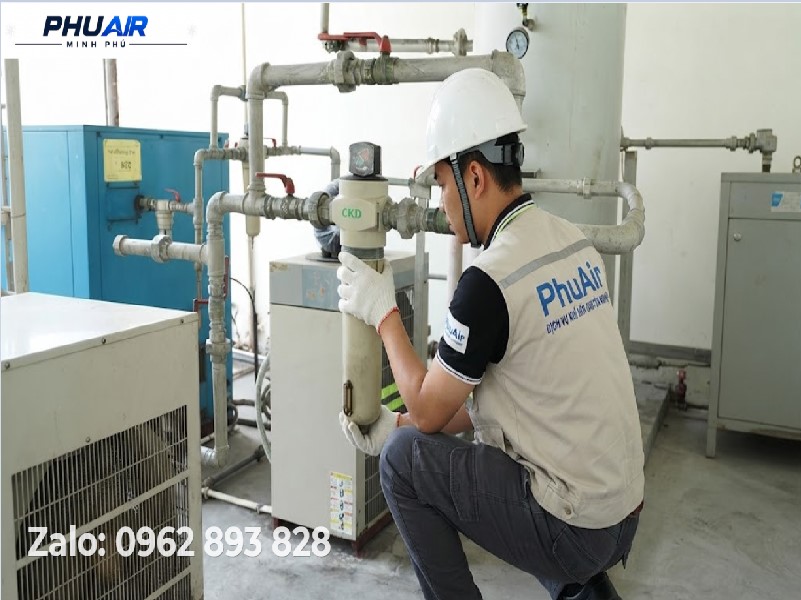
- Check the Oil Level
First, verify the oil level under inspection conditions that comply with the manufacturer's requirements. You should also record the amount of oil that needs to be added and the machine's operating hours.
Recording this data helps distinguish actual oil consumption from apparent differences caused by checking the oil level under different conditions.
- Check for External Oil Leaks
Inspect the machine housing, oil lines, connections, gaskets, seals, and the bottom of the machine.
If oil is found, clean the area and monitor it again to identify the exact source of the leak.
- Check for Oil in the Compressed Air System
If no external leaks are found, check whether oil is being carried along with the compressed air.
For screw air compressors, inspect the oil separator assembly and oil return line according to the machine's design.
- Check the Oil Condition
Confirm the oil type, service life, oil change history, and actual oil condition.
If there are concerns about the oil type or oil change procedure, cross-check them against the technical documentation for the specific model in use.
- Check Cooling Conditions
If the machine is also running at a high temperature, inspect the cooling and ventilation systems. For air-cooled machines, pay attention to the cooler and fan. For water-cooled machines, inspect the system according to its design and the manufacturer's requirements.
- Inspect Internal Mechanical Components in Detail
Only proceed with an in-depth inspection if external causes do not adequately explain the oil consumption.
For piston air compressors, it may be necessary to inspect the piston rings, piston, cylinder, and related components if operating symptoms provide sufficient grounds for doing so.
5. Quick Diagnostic Table
Actual Condition | Possible Cause to Consider | What Needs to Be Clarified |
|---|---|---|
Oil appears on the outside of the machine | Oil leakage | Leak location and condition of sealing components |
Oil appears in the compressed air | Oil carried over with the air | Oil separation and oil return systems |
Oil consumption accompanied by high temperature | Thermal conditions or oil condition | Cooling, ventilation, and oil condition |
Piston compressor consumes oil and builds pressure slowly | Mechanical or valve problems | Valves, piston rings, piston, cylinder |
Oil consumption after maintenance | Oil type or maintenance procedure | Oil used, oil quantity, and maintenance practices |
No visible leaks, but the oil level continues to drop | Further inspection required | Possibility of oil carryover or oil consumption within the machine |
What Should You Avoid When Troubleshooting Excessive Oil Consumption in Air Compressors?
The most common mistake is simply topping up the oil without identifying the cause. This may lead operators to believe the problem has been resolved while oil continues to be lost.
Another mistake is immediately replacing the oil separator assembly or piston rings without verifying the cause. These components may contribute to oil consumption, but not every case originates from them.
Using oil that does not meet the required specifications or mixing different oil types without authorization should also be avoided. For industrial machines, the oil type and maintenance procedure should be confirmed against the specific model and its technical documentation.
In particular, if the machine triggers a high-temperature alarm or exhibits abnormal operating symptoms, do not repeatedly reset the protection system to keep the machine running without identifying the cause.
When Is a Technical Inspection Necessary?
A technical inspection is recommended if the oil level drops abnormally quickly, significant amounts of oil appear in the compressed air, or an oil leak is suspected but its location cannot be identified.
A machine that consumes oil while also overheating, running longer than usual, building pressure slowly, or producing abnormal noise and vibration should undergo a more comprehensive inspection.
When requesting a technical inspection, provide the machine model, compressor type, operating hours, amount of oil added, time between oil top-ups, and photographs of areas showing signs of oil leakage. This information provides a more reliable basis for diagnosis.
6. Frequently Asked Questions About Air Compressor Oil Consumption
Does Excessive Oil Consumption Mean the Air Compressor Is Faulty?
Not necessarily. A falling oil level may be related to leakage, oil carryover into the compressed air, oil condition, or other machine-related issues. The cause must be identified before determining which component, if any, has failed.
Can Excessive Oil Consumption Be Caused by Piston Rings?
In piston air compressors, piston rings may be a potential cause when other corresponding symptoms are present, such as reduced compression performance, slow pressure buildup, or signs of blow-by. Do not reach this conclusion based on oil consumption alone.
Why Is There Oil in the Compressed Air Lines?
This may be related to the oil separation system's performance or the oil return system in machines that use oil during compression. The system should be inspected according to the design and specific model of the machine.
Should You Keep Adding Oil When an Air Compressor Consumes Too Much Oil?
If the oil level falls below the manufacturer's operating requirements, it should be restored to the specified level. However, adding oil is only a measure to maintain operating conditions; it does not replace the need to identify the cause of oil consumption.
What Should Be Checked if an Air Compressor Both Consumes Oil and Overheats?
Inspect the oil condition, external leaks, cooling system, ventilation conditions, and the possibility of oil carryover into the compressed air. If a piston air compressor also shows signs of reduced compression performance, inspect the piston rings, piston, and cylinder when there is sufficient evidence to justify further investigation.
7. Conclusion
Excessive oil consumption in an air compressor should be diagnosed by identifying where the oil is being lost and examining the accompanying symptoms, rather than relying solely on the oil level.
If oil appears on the outside of the machine, locate the leak. If oil appears in the compressed air, inspect the oil separation and return systems. If the machine also runs at a high temperature, check the cooling conditions and oil condition. For piston air compressors showing additional signs of reduced compression performance, consider inspecting the piston rings, piston, and cylinder when sufficient evidence supports this approach.
Most importantly, do not replace components based on assumptions. Information about the machine model, oil consumption, operating hours, and actual symptoms provides the basis for determining the appropriate inspection procedure.
PhuAir Air Compressor Inspection and Diagnostic Support
If your machine is experiencing excessive oil consumption, PhuAir can help assess its actual condition, identify the appropriate diagnostic approach, and recommend a solution suited to the compressor type and operating conditions.
When contacting the technical team, provide the machine brand, model, compressor type, operating hours, and photographs of the oil consumption issue so the technicians have sufficient information for an initial assessment.