

Piston Air Compressor Runs Continuously and Overheats: Causes and Inspection Methods
Quick Answer: A piston air compressor that runs continuously without shutting down, accompanied by an excessively hot compressor head, is often caused by severe air leaks in the system (piping, automatic condensate drains, or leaks in air-consuming equipment), increased air demand exceeding the design capacity, worn piston rings or cylinders that reduce compression efficiency, intake/discharge valve assembly or check valve faults that cause reverse airflow or air loss, or insufficient lubricating oil that increases mechanical friction.
Unlike high-capacity compressor models with flexible rest cycles, piston air compressors are designed to operate according to a specific duty cycle and require downtime for heat dissipation. When a machine must run continuously without a break, the heat generated by friction between the piston, piston rings, and cylinder wall can exceed the natural heat dissipation capacity of the aluminum cooling fins, resulting in severe overheating.
However, continuous operation does not necessarily mean that the machine is faulty. It is necessary to determine why the machine must run continuously: increased air demand, air leaks, pressure settings, or problems involving the valves, piston rings, piston, cylinder, cooling system, or lubrication system.
Does Continuous Operation Cause a Piston Air Compressor to Overheat?
Yes. The piston compressor head generates heat during air compression. When the machine must run continuously for an extended period, heat is generated continuously and may accumulate if heat dissipation is inadequate: continuous operation → continuous compression → continuous heat generation → heat accumulation → increased compressor head temperature.
However, two situations must be distinguished:
Case 1 – The machine runs continuously due to high air demand: If the system genuinely requires a large volume of air, the machine may need to run longer to meet that demand. The primary cause may lie in operating conditions and does not necessarily indicate a faulty compressor head.
Case 2 – The machine runs continuously because it cannot reach or maintain the required pressure: If air demand remains unchanged but the machine suddenly begins running continuously, the cause must be investigated. Possible causes include air leaks, intake/discharge valve faults, check valve faults, worn piston rings, piston/cylinder wear, a faulty pressure switch or control system, pressure settings, or an abnormal increase in air consumption. This situation requires particular attention because continuous operation may indicate an underlying fault.
1. Signs That a Piston Air Compressor Is Running Continuously and Overheating Abnormally
Symptoms | Possible Causes | What to Check |
|---|---|---|
The machine no longer shuts down automatically; pressure does not reach the setpoint | Pressure, settings, or control problems | Pressure and pressure switch |
Takes a long time to reach the required pressure | Reduced compression efficiency | Valves, piston rings, piston, cylinder |
Continuous operation + compressor head overheating | High load/poor cooling | Load, cooling fins, ventilation |
Continuous operation + weak air output | Loss of compression capacity or air leakage | Valves, check valve, piston rings, piping |
Overheating + knocking noises | Mechanical/lubrication problems | Piston, bearings, oil |
Overheating + heavy dust buildup on the compressor head | Poor heat dissipation | Cooling fins |
Overheating + low oil level | Lubrication problems | Oil level and leaks |
2. Causes of Continuous Operation and Overheating in Piston Air Compressors
1. Increased Air Demand
This is the first cause to rule out before dismantling the machine. If air consumption increases or additional air-consuming equipment is connected to the system, the piston compressor may need to run longer to meet demand.
For example: previously, the machine ran → reached the required pressure → stopped. Now, the machine runs → pressure drops rapidly → the machine continues running → it struggles to reach a shutdown condition. In this case, actual air consumption should be checked before concluding that the machine is faulty.
2. Air Leaks in the System
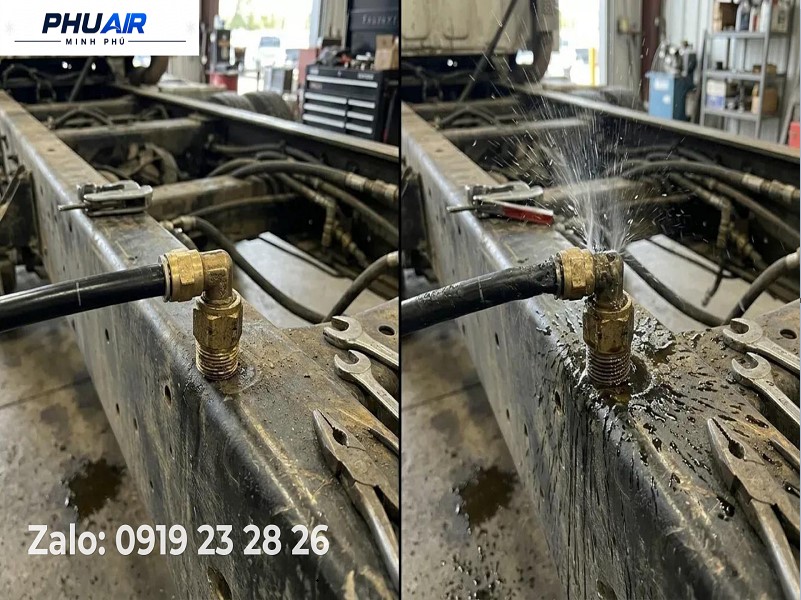
Air leaks cause a continuous loss of the compressed air being produced: air leakage → pressure drop → the machine must compensate for the lost air → extended operating time → compressor head overheating. The following locations should be inspected: couplings, air hoses and pipes, valves, quick-connect fittings, automatic condensate drains, air receivers, distribution piping, and air-consuming equipment.
If the machine runs continuously but actual air consumption has not increased, air leakage is one of the potential causes that should be investigated early.
3. Intake/Discharge Valve Assembly or Check Valve Faults
The intake and discharge valves play an important role in the compression cycle of a piston air compressor. If the valve plates are covered with carbon deposits or dirt, stuck, bent, cracked, broken, or unable to seal properly, compression efficiency may decrease, forcing the machine to run longer to reach the required pressure.
In addition, if the check valve (located between the compressor head and the air receiver) leaks, compressed air may flow backward or escape, preventing the machine from reaching the pressure required to shut down and causing it to run continuously.
A combination of symptoms worth noting is: continuous operation + slow pressure buildup + compressor head overheating. In this case, the intake/discharge valve assembly and check valve should be included in the inspection.
4. Worn or Stuck Piston Rings
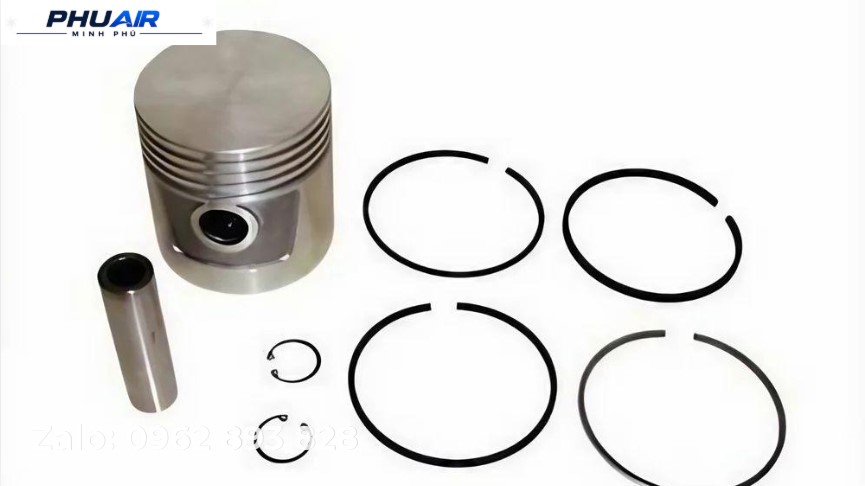
Piston rings seal the gap between the piston and the cylinder wall. When the piston rings are worn or stuck, air can leak past the piston, reducing compression efficiency: reduced sealing performance → lower compression efficiency → longer time to reach the required pressure → extended operating time → greater heat accumulation.
If the machine also exhibits weak air output, slow pressure buildup, continuous operation, abnormal oil consumption, or signs of air leakage around the piston area, the piston rings should be inspected along with the piston and cylinder. Do not conclude that the piston rings are worn based solely on the machine overheating.
5. Worn Piston or Cylinder
When the piston or cylinder is worn, resulting in excessive clearance, the compression chamber may lose its sealing effectiveness. Air leakage then reduces the volume of compressed air produced. The machine must run under load for longer to compensate for the pressure drop, generating localized heat.
If the machine has been operating for an extended period and simultaneously exhibits continuous operation + weak air output + slow pressure buildup + overheating, internal mechanical wear in the compressor head should be considered. This category of causes requires an in-depth inspection.
6. Dirty Compressor Head Cooling Fins
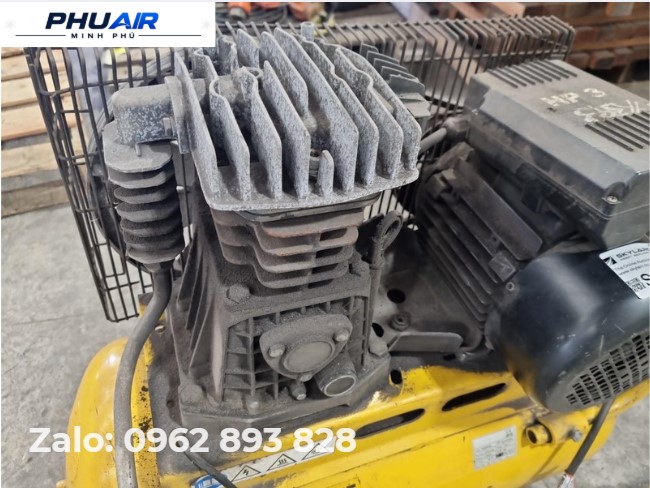
Piston compressors generate heat during compression, so effective heat dissipation is essential. If the cooling fins are covered with dust, oil, or dirt, heat transfer to the surrounding environment may decrease. When the machine is also running continuously, heat is generated more frequently and continuously, making overheating more likely.
How to Check: Inspect the cooling fins for dust and oil deposits, check whether the cooling passages are blocked, and ensure that the area around the compressor head is adequately ventilated.
7. Insufficient or Unsuitable Lubricating Oil
For piston air compressor models that use oil lubrication, check the oil level and condition when the machine shows signs of abnormal overheating. Insufficient oil in the crankcase or degraded lubricating performance can increase sliding friction, causing the compressor head temperature to rise rapidly.
Check the following: oil level, oil type, oil condition, oil leaks, and maintenance history. Do not simply top up the oil without investigating why the oil level has dropped.
8. High Compressor Room Temperature or Poor Ventilation
A continuously running machine releases a significant amount of heat into the surrounding environment. If the compressor room is enclosed or hot air cannot escape, the temperature around the machine may rise, reducing the heat dissipation capability of the aluminum cooling fins on the compressor head.
The key diagnostic question is: Is the machine overheating because of its own operating condition, or because the surrounding environment is also excessively hot?
9. Faulty Pressure Switch or Control System
On piston air compressors equipped with a pressure switch, this component controls machine operation according to the pressure setpoint. If the machine reaches the shutdown condition but continues running, check the pressure settings, pressure switch condition, associated signal and control circuits, and switching mechanism.
However, first confirm that the machine has actually reached the shutdown condition. If the required pressure has not been reached because the compressor is underperforming or the system is consuming large amounts of compressed air, replacing the pressure switch will not resolve the root cause.
3. How to Inspect a Piston Air Compressor That Runs Continuously and Overheats
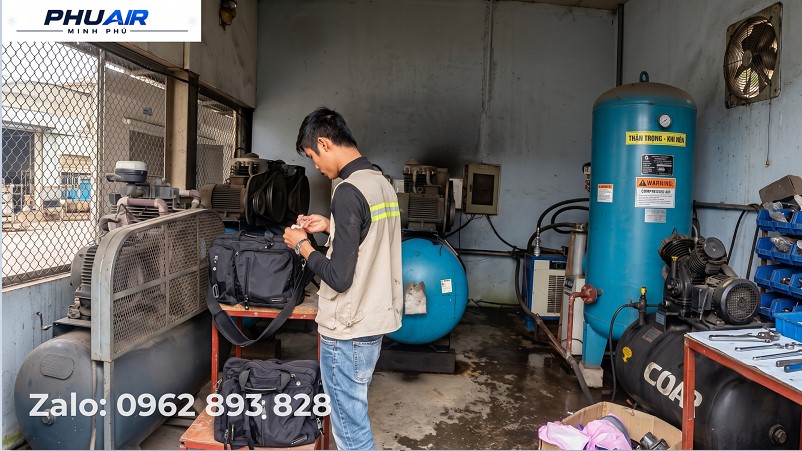
Step 1 – Check the Pressure: Does the machine reach the required pressure? Does the pressure rise quickly or slowly? How long does it take to reach the target pressure? Does the pressure continue to drop when no compressed air is being used? These are important data points for distinguishing between insufficient pressure-generation capacity and air consumption or leakage within the system.
Step 2 – Check for Air Leaks: If the machine runs continuously, inspect the system for leaks, paying particular attention to situations where no equipment is using compressed air but the compressor must continue running to maintain pressure. If a leak is found, repair it and reassess the machine's operating cycle.
Step 3 – Inspect the Compressor Head and Heat Dissipation: Check the cooling fins, dust and dirt buildup, oil deposits, clearance around the compressor head, and ventilation in the compressor room. If the cooling fins are dirty, clean them using a method appropriate for the machine.
Step 4 – Check the Oil: Inspect the oil level, condition, type, and any signs of leakage. If the oil level is low, identify the cause before allowing the machine to continue operating for extended periods.
Step 5 – Inspect the Intake Valve, Discharge Valve, and Check Valve: If the machine runs continuously, overheats, and builds pressure slowly, inspect the valve assemblies. Do not focus solely on temperature while overlooking the possibility of reduced compression efficiency or compressed air flowing backward through the check valve.
Step 6 – Inspect the Piston Rings, Piston, and Cylinder: If external causes do not explain the machine's poor compression performance and continuous operation, conduct a more in-depth inspection, especially if airflow has decreased, pressure builds slowly, oil consumption is abnormal, blow-by is present, or unusual mechanical noises occur.
4. A Continuously Running Machine Does Not Necessarily Have a Compressor Head Problem
This is a common misconception among operators.
Situation A – The Machine Is Operating Properly, but the System Has Air Leaks: The compressor performs normally → pressure reaches the target → compressed air is lost through leaks → pressure drops → the machine restarts. → Repair the leaks.
Situation B – The Machine Cannot Generate Sufficient Pressure: Problems with the valves, check valve, piston rings, or piston → reduced compression capacity → slow pressure buildup → the machine must run longer. → Inspect the compressor head.
Situation C – Increased Air Demand: Equipment consumes more compressed air → pressure drops quickly → the compressor must run continuously. → Assess air demand and compressor capacity.
Situation D – The Control System Fails to Stop the Machine: The machine has reached the required pressure but does not switch to the stopped state. → Inspect the pressure switch and control circuit.
5. Should You Continue Using a Piston Air Compressor That Runs Continuously and Overheats?
Do not allow the machine to continue running for extended periods if its temperature is rising abnormally and the cause has not been identified. Prolonged continuous operation under excessive load can cause temperatures to exceed material limits, potentially resulting in burnt oil seals, cylinder scoring, or piston seizure. These are costly mechanical failures that may require a major compressor head overhaul.
Stop the machine for inspection if any of the following occurs: the compressor head heats up rapidly, the machine fails to reach the required pressure, pressure builds very slowly, abnormal knocking noises occur, vibration becomes excessive, a burning smell develops, the oil shows abnormal signs, or thermal protection is activated.
Do not repeatedly reset the thermal protection and restart the machine without identifying the cause.
6. Recommended Troubleshooting Sequence
Check pressure → Check compressed air demand → Check for air leaks → Inspect cooling fins and ventilation → Check oil → Inspect intake/discharge valves and check valve → Inspect piston rings, piston, and cylinder → Check the pressure switch and control system → Test-run the machine and monitor its operation.
This approach helps prevent unnecessary compressor head disassembly or immediate piston ring replacement simply because the machine is overheating.
How Can Continuous Operation of a Piston Air Compressor Be Prevented?
In addition to addressing individual faults, assess the system as a whole. Inspect the entire piping network carefully to identify and repair air leaks, and ensure that the air receiver capacity is appropriate for the factory's actual compressed air consumption.
An air receiver that is too small for the demand may cause the compressor to cycle on and off frequently or run for extended periods to maintain pressure, even when the compressor head and valve system are functioning normally.
7. Common Mistakes to Avoid
Assuming that continuous operation means the machine is faulty: This is not always the case; increased air demand or air leaks can also cause continuous operation.
Inspecting only the machine without checking the compressed air system: If piping or air-consuming equipment leaks, the compressor may continue running excessively even after repairs.
Cleaning only the compressor head: If the cause lies in the valves, check valve, piston rings, or piston, cleaning the cooling fins will not resolve the problem.
Replacing piston rings based on guesswork: Extended operating time and overheating are not sufficient evidence to conclude that the piston rings are worn.
Repeatedly resetting the thermal protection: If the machine trips the protection device, identify the cause before returning it to service.
Failing to reassess air receiver capacity: Even after mechanical faults are corrected, an air receiver that is too small for actual demand can cause the compressor to continue running almost continuously.
8. Frequently Asked Questions (FAQ)
1. Why does a piston air compressor overheat when running continuously?
Possible causes include prolonged operation due to high air demand, air leaks, failure to reach the required pressure, or problems with the intake/discharge valves, check valve, piston rings, piston, cylinder, lubricating oil, or cooling system.
2. Is continuous operation of a piston air compressor caused by worn piston rings?
Not necessarily. Worn piston rings can reduce compression performance and force the machine to run longer, but this must be distinguished from air leaks, faulty intake/discharge valves or check valves, and increased air demand.
3. What if the machine runs continuously but still builds pressure?
Check whether the machine stops correctly once the required pressure is reached. Also inspect for air leaks and assess compressed air demand.
4. What should I do if a piston air compressor runs continuously and the compressor head becomes very hot?
Stop the machine if the temperature is rising abnormally and ensure it is safe to inspect. Then check pressure, air leaks, heat dissipation, oil, and compression performance before resuming operation.
5. Should piston rings be replaced when the machine runs continuously and overheats?
Do not replace them immediately. There must be symptoms and inspection results confirming that the piston rings are genuinely worn or no longer provide adequate sealing.
6. Can continuous operation of a piston air compressor burn the seals or damage the compressor head?
Yes. Continuous operation under excessive load can raise temperatures beyond material limits, potentially causing burnt oil seals, cylinder scoring, or piston seizure.
7. How can continuous operation of a piston air compressor be prevented?
Inspect the entire piping network carefully to repair air leaks and ensure that the air receiver capacity matches the factory's actual compressed air consumption.
9. Conclusion
A piston air compressor that runs continuously and overheats requires investigation. The problem should not be addressed by focusing on temperature alone. The three most important diagnostic questions are:
Why must the machine run continuously? → High air demand, air leaks, or failure to reach the required pressure?
Why is the compressor head overheating? → Cooling, lubrication, load, or a mechanical problem?
Are there signs of reduced compression performance? → Inspect the intake/discharge valves, check valve, piston rings, piston, and cylinder.
If the machine exhibits continuous operation + overheating + slow pressure buildup, prioritize checking compression performance and the cooling system while also reassessing air receiver capacity against actual demand, rather than simply cleaning or replacing a component based on guesswork.
10. PhuAir Support for Piston Air Compressors That Run Continuously and Overheat
If your factory's piston air compressor system runs continuously without stopping and overheats, prepare and send PhuAir the following information:
Photos of the machine's technical nameplate.
A description of its actual operating time during each shift, including whether it cycles on and off or runs continuously.
Photos showing the actual oil level through the sight glass and the condition of the compressor head area.
Recent maintenance, oil change, or component replacement history.
Machine model, power rating, operating pressure, and observed abnormal symptoms.
The PhuAir technical team will help analyze the information, narrow down the possible causes, and recommend the safest and most effective corrective action instead of replacing components based on guesswork.