

Piston Air Compressor Does Not Load: Causes & Standard SOP Troubleshooting Procedure
Article reviewed by the PhuAir Technical Department – Updated: 08/09/2026
In CNC machining, woodworking, and textile workshops, piston air compressors often have to operate continuously to supply air to equipment. However, if the motor continues running but pressure does not increase, increases very slowly, or fails to reach the required pressure, the system may be experiencing a condition commonly referred to in the field as a piston air compressor that does not load or a piston air compressor that does not build air pressure.
Unlike screw air compressors, piston compressors generally do not have an electronic Load/Unload state operating under the same mechanism. Therefore, in this context, the term “does not load” is primarily used to describe a condition in which the Airend does not generate sufficient flow or does not deliver air into the receiver as required.
The cause may lie in the suction/discharge valve plates, piston rings, piston-cylinder assembly, Airend gasket, check valve, unloading mechanism/unloader, or the compressed-air system itself.
⚠️ Safety Note: Procedures involving Airend removal, valve-plate inspection, spring adjustment, or unloader mechanisms are intended only for qualified technicians and must be performed after energy isolation, pressure release, and in accordance with the manufacturer's instructions.
1. Quick Answer: Why Does a Piston Air Compressor Fail to Load?
A piston air compressor that does not load is commonly used to describe a condition in which the compressor continues operating but fails to generate sufficient pressure or compressed-air flow as required.
Common causes include:
- Suction/discharge valve plates that are bent, cracked, broken, or contaminated.
- Worn piston rings that reduce compression chamber sealing.
- Worn or scored piston or cylinder.
- Leaking Airend gasket.
- A stuck or leaking check valve, causing backflow depending on its installation location.
- An unloading mechanism/unloader or pilot valve that is not operating correctly on models equipped with these components.
- External compressed-air leakage or air-consuming equipment using more air than the compressor can supply.
To accurately identify the cause, it is necessary to distinguish between an Airend that is genuinely failing to generate sufficient air and a situation where the compressor is generating air but the system is experiencing leakage or excessive air demand.
2. What Does “Does Not Load” Mean for a Piston Air Compressor?
For piston air compressors, “does not load” is not always an electronic control state like it is on a screw compressor.
In field operation, the term is commonly used when the operator observes:
- The motor continues running but pressure does not increase.
- Pressure increases much more slowly than before.
- The compressor reaches a certain pressure level and then fails to increase further.
- Output airflow is weak.
- An abnormal air-hissing sound is heard around the Airend or unloading mechanism.
- The compressor runs for a long time but does not reach the set pressure.
However, the Airend should not immediately be concluded to be weak. Pipeline leakage, an open drain valve, continuously operating air-consuming equipment, or changes in air demand can also prevent the pressure from reaching the required level.
3. Piston Compressor Pressure-Building Diagnosis Table
Symptom | Suspected Component | Inspection & Corrective Approach |
|---|---|---|
Compressor runs continuously but an abnormal air-hissing sound is heard at the unloading mechanism | Unloader/pilot valve, if equipped on the model | Inspect the mechanism according to the documentation for the correct model; check for sticking, gasket condition, and control air-line condition. |
Compressor runs but pressure increases very slowly | Valve plates, piston rings, piston-cylinder assembly, or system leakage | Compare performance with the manufacturer's specifications/baseline; inspect the Airend and compressed-air system systematically. |
Airend operates but airflow is low, with abnormalities around the valve area | Suction/discharge valve plates | Technician removes and inspects the valve assembly according to the correct procedure and model configuration; clean or replace if damaged. |
Compressor reaches a low pressure level and then fails to increase further | Airend, check valve, leakage, or high air demand | Isolate sections of the system to determine whether the pressure limitation originates from the compressor or downstream consumption. |
Abnormal backflow of air toward the Airend occurs when the compressor stops | Check valve or discharge piping configuration | Check the check valve location, installation direction, and sealing performance according to the system design. |
Receiver pressure drops rapidly even though the compressor has just built pressure | Pipeline leakage, valves, equipment, or drain valve | Check the entire system for leakage and inspect the condition of drain points and air-consuming equipment. |
Note: A single symptom may have multiple possible causes. Do not replace spare parts based solely on one isolated indication.
4. Common Causes
4.1. Damaged Suction or Discharge Valve Plate
The valve plate (valve plate/valve assembly) directs airflow during the suction and compression processes.
If the valve plate is: Bent; cracked; broken; deformed; contaminated with oil, dust, or deposits;
its sealing and airflow-directing performance may deteriorate.
As a result, the compressor may continue running but the generated airflow decreases, the time required to reach the required pressure increases, or the compressor fails to reach its normal pressure.
4.2. Worn Piston Rings
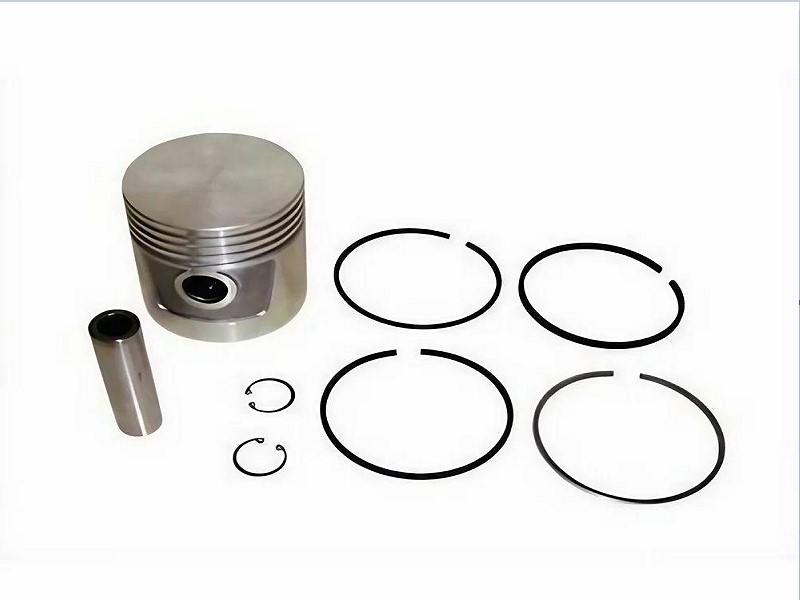
The piston ring maintains sealing between the piston and cylinder wall. When the piston ring is worn or damaged, compression chamber sealing is reduced and compression performance may decrease.
In oil-lubricated piston models, this condition may also increase blow-by and affect the operating condition of the piston assembly.
Possible signs that should be evaluated together may include: increased receiver filling time; reduced airflow; reduced compression performance; and abnormal conditions in the piston-cylinder assembly.
Do not conclude that the piston ring is faulty based solely on the compressor taking longer to fill the receiver.
4.3. Piston or Cylinder Wear
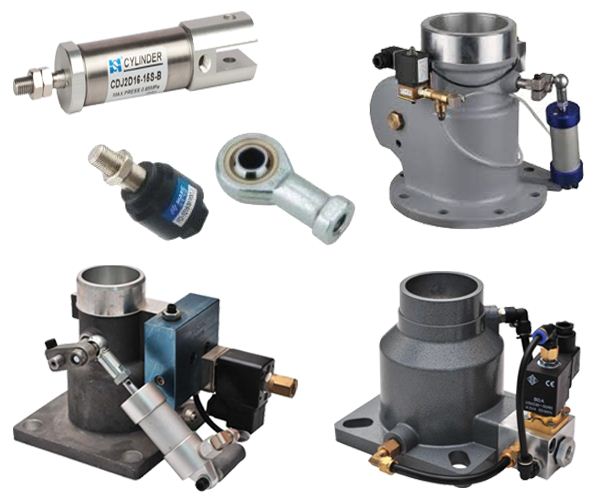
After a long period of operation, the piston and cylinder may develop wear or surface scoring.
Increased clearance reduces sealing performance in the compression chamber, thereby affecting the flow rate and efficiency of the Airend.
Assessment of this condition must be based on the technical specifications for the correct model, the actual condition, and the measurement results obtained by the technician.
4.4. Airend Gasket Leakage
The gasket between the surfaces of the Airend assembly ensures proper sealing.
When the gasket becomes hardened, cracked, or damaged, air may leak around the Airend.
Possible signs include: an air-hissing sound; abnormal conditions around the Airend; reduced compression performance.
However, other potential leakage points must be ruled out before concluding that the Airend gasket is the cause.
4.5. Faulty Check Valve
The check valve controls the direction of airflow within the system.
If the valve is stuck, installed in the wrong direction, or fails to seal properly, air may flow back toward the Airend depending on the valve location and system configuration.
This can prevent the pressure-building process from reaching the required condition or cause abnormal pressure loss.
4.6. Unloader Mechanism or Pilot Valve Not Operating Correctly
Some piston compressors are equipped with an unloader, pilot valve, or unloading mechanism to support the starting process and pressure control.
If this mechanism is stuck, leaking, or fails to change state as designed, air may be discharged or controlled incorrectly.
Important: Not every piston compressor uses a centrifugal unloading mechanism. If the model uses a centrifugal unloader, the technician must inspect the mechanism according to the manufacturer's documentation for that specific model.
Do not adjust the spring or change the pilot settings without first confirming the correct machine configuration.
4.7. Compressed-Air Leakage or Excessive Air Demand
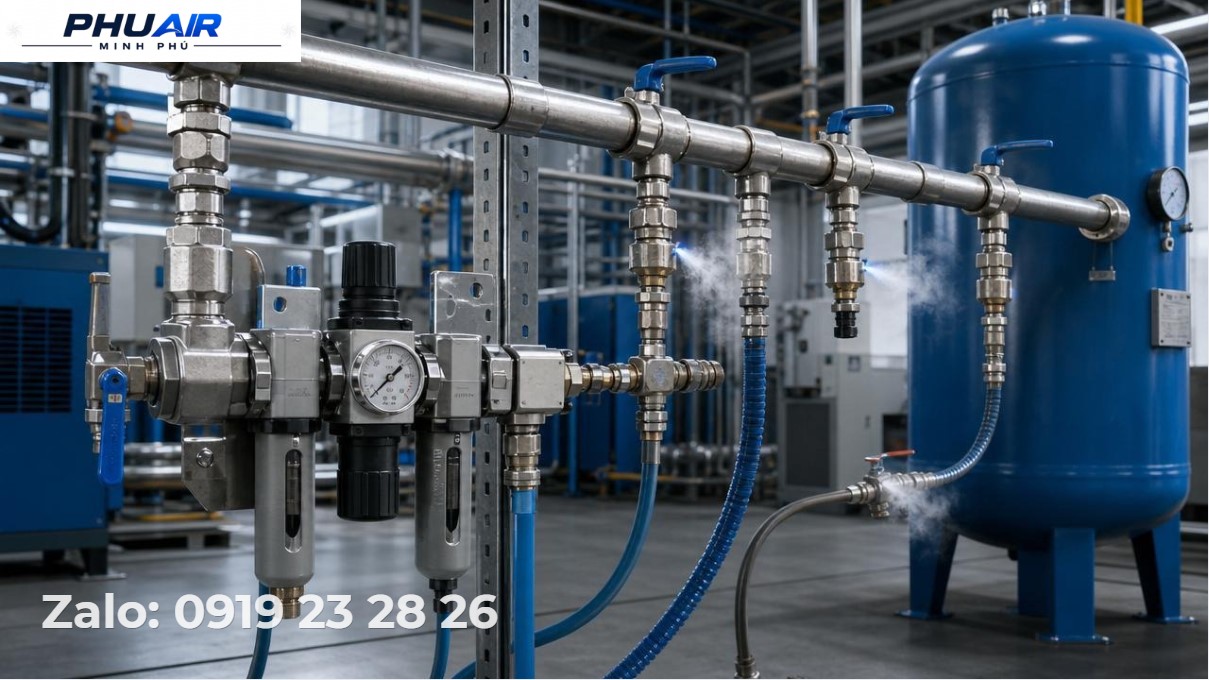
Not every case where the compressor runs continuously while pressure remains low originates from the Airend.
The downstream system must also be inspected, including: piping; valves; couplings; drain valves; filters; air-consuming equipment; and abnormal points of consumption.
If air loss or air consumption exceeds the compressor's supply capacity, the compressor may run continuously even though the Airend is operating normally.
5. Standard 5-Step Inspection & Troubleshooting SOP
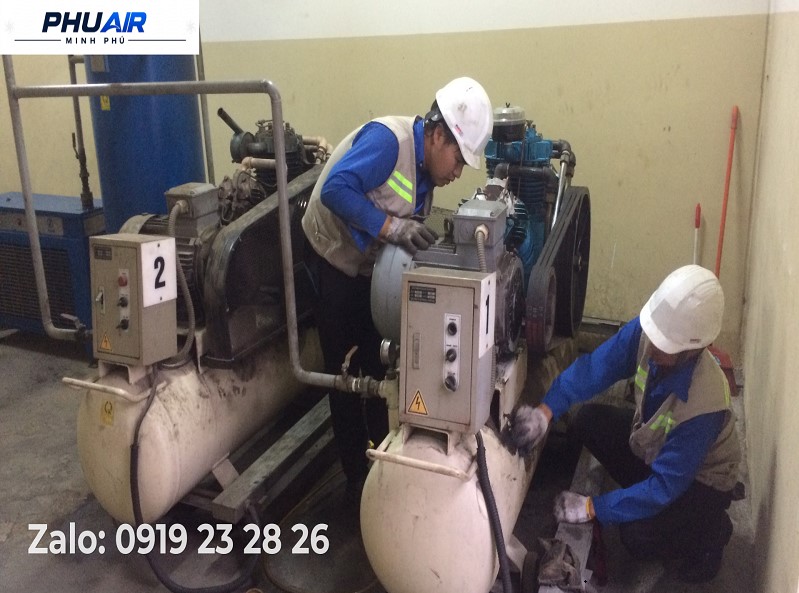
⚠️ Scope of Application: Steps involving energy isolation, Airend removal, mechanical mechanism inspection, and valve adjustment must be performed by qualified personnel in accordance with the site's safety procedures and the technical documentation for the correct model.
Step 1 - Isolate Energy Sources and Perform LOTO
Stop the machine according to the operating procedure.
The technician shall:
isolate the electrical power supply to the machine;
lock and tag the equipment according to the LOTO procedure;
prevent unintended machine startup;
verify the isolation status before starting work.
Do not perform mechanical disassembly while the machine can still start or hazardous energy remains present.
Step 2 - Release Pressure and Confirm a Safe Condition
Before opening any pressurized component:
identify chambers and piping that may still contain pressure;
release pressure according to the manufacturer's instructions;
drain condensate at appropriate locations;
confirm that the pressure has been released and no hazardous pressure energy remains before disassembly.
Do not rely solely on the reading of a single pressure gauge as the only basis for confirming a safe condition.
⚠️ Do not remove the Airend, valves, or pressurized components before confirming a safe condition.
Step 3 - Inspect the Unloader/Pilot Mechanism if Equipped
If the machine uses an unloader, pilot valve, or centrifugal unloader, the technician should inspect:
mechanism condition;
movement according to the design;
springs and seals;
control air piping;
signs of leakage or sticking.
Do not use your hands to directly touch piping that may still be hot.
Spring adjustment or changes to pilot settings must comply with the specifications for the correct model.
Step 4 - Inspect the Valve Assembly and Airend
The technician removes the Airend assembly according to the manufacturer's instructions and inspects:
suction valve plate;
discharge valve plate;
valve plate;
gasket;
sealing surfaces;
piston and cylinder, if necessary.
If a valve plate is found to be cracked, broken, bent, or damaged beyond the allowable limit, it must be replaced with a part matching the correct model/specification.
Dirt, oil residue, or contaminants deposited on the valve assembly must be treated using a method appropriate for the material and the maintenance instructions.
Step 5 - Reassemble and Commission According to Manufacturer Specifications
After repair:
reinstall all components in the correct configuration;
replace necessary gaskets/parts;
tighten bolts to the specified torque;
check for leakage;
perform a test run according to the procedure;
check pressure-building and flow performance.
Do not use a fixed receiver filling time as a standard for all piston compressors.
Filling time should be compared against:
the manufacturer's specifications;
equivalent test conditions;
historical operating data from the same machine.
If filling time increases significantly compared with the baseline, continue the diagnosis rather than simply concluding that the Airend is weak.
6. Operating Mistakes That Require Special Attention
⚠️ Do Not Hit the Cylinder or Airend with a Hammer
Heavy impact on the Airend assembly can damage valve plates, sealing surfaces, or mechanical components.
This method should not be used to “force the compressor into load.”
⚠️ Do Not Force the Pressure Switch
Do not bypass or force the pressure switch to keep the machine running before the cause has been identified.
The Pressure Switch and pressure control system provide protection and control functions according to the configuration of each machine.
⚠️ Do Not Place Your Face or Hands Near High-Pressure Air Discharge Points
When inspecting the safety valve, unloader, or air lines, maintain a safe distance.
Compressed air can cause injury through direct contact with the body or by carrying oil, dust, and contaminants.
⚠️ Do Not Weld or Repair the Air Receiver Vessel Yourself
If the air receiver shows signs of cracking, severe corrosion, deformation, or leakage, do not weld, patch, or repair the pressure-bearing structure yourself.
The receiver should be placed into the appropriate inspection, assessment, and corrective process in accordance with the regulations applicable to pressure equipment.
7. Frequently Asked Questions (FAQ)
Why Does a Piston Air Compressor Run but Fail to Build Pressure?
Common causes include:
damaged suction/discharge valve plates;
worn piston rings;
worn piston or cylinder;
leaking Airend gasket;
check valve problems;
unloader/pilot malfunction on models equipped with these components;
compressed-air leakage;
air demand exceeding the machine's supply capacity.
Inspection should be performed systematically to distinguish Airend faults from downstream system faults.
Does a Piston Compressor Taking a Long Time to Fill the Receiver Mean the Compressor Is Weak?
It may, but this cannot be concluded immediately.
If receiver filling time has increased significantly compared with previous data under the same operating conditions, the following should be inspected:
valve plates;
piston rings;
piston-cylinder assembly;
gaskets;
check valve;
system leakage;
air consumption demand.
For example, if the previous filling time was 5 minutes but has now increased to 15 minutes, this is a sign that further diagnosis is required. However, the cause may be in the Airend or the compressed-air system.
Does a Piston Air Compressor Failing to Load Always Mean the Pilot Valve Is Faulty?
No.
The pilot valve/unloader is only one possible cause and depends on the configuration of the specific model.
If the compressor cannot build sufficient pressure, the valve assembly, piston rings, piston-cylinder assembly, check valve, and system leakage should also be inspected.
How Can You Determine Whether a Piston Compressor Actually Has a Weak Airend?
Do not rely solely on how long the compressor runs.
Compare flow rate, filling time, achieved pressure, and operating parameters with the manufacturer's data or the machine's own baseline under equivalent conditions.
If a more detailed inspection is required, the technician may perform appropriate measurements to evaluate the condition of the Airend assembly.
8. Conclusion
A piston air compressor that fails to load — commonly referred to in the field as a piston compressor that fails to build air pressure — may be caused by either the Airend or the downstream compressed-air system.
The key groups of causes to inspect include:
Valve Plates → Piston Rings → Piston/Cylinder → Gaskets → Check Valve → Unloader/Pilot → System Leakage.
Do not replace parts or adjust valves based on a single symptom. For Airend removal, inspection of pressurized mechanisms, or pilot adjustment, the work must be performed in accordance with LOTO, safety procedures, and the technical documentation for the specific model.
🔧 Need Help Identifying the Fault?
Send PhuAir:
Machine nameplate photo;
Model/Serial number;
Airend photo;
Pressure Switch or pilot/unloader assembly photo, if equipped;
Description of the current pressure and machine operating condition.
PhuAir can help narrow down the possible causes, identify the configuration, determine compatible spare parts, and recommend an appropriate repair solution, rather than replacing parts based on assumptions.