

Air Compressor Oil Leaks: 7 Areas to Inspect
Air compressor oil leaks are often identified when oil accumulates on the machine housing, drips onto the floor, or the oil level drops faster than normal. However, the location where oil appears on the outside of the machine is not necessarily the actual source of the leak.
Oil may flow or spread from a higher location to components below, making visual identification of the cause unreliable. Therefore, when an air compressor leaks oil, clean the suspected area and monitor it again during operation to identify the exact source of the leak.
For screw air compressors, pay particular attention to components in the oil system and sealed connections. For piston air compressors, in addition to oil lines, gaskets, and seals, inspect the compressor head and crankcase areas as appropriate for the machine's design.
Quick Answer: Where Do Air Compressors Commonly Leak Oil?
There are 7 areas to inspect when an air compressor is found to be leaking oil: oil lines and connections, sealing gaskets, shaft seals, the oil filter assembly, the oil separator assembly, connections throughout the oil system, and the crankcase or compressor head area on piston air compressors.
However, not every machine has all of these locations. The specific configuration and locations depend on the compressor type, model, and manufacturer's design.
Inspection Area | Observable Signs | What Needs to Be Verified |
|---|---|---|
Oil lines and connections | Oil around connections | Whether connections are loose, cracked, or damaged |
Sealing gaskets | Oil leaking around mating surfaces | Gasket condition and contact surfaces |
Shaft seals | Oil concentrated around the shaft area | Condition of the seal and shaft |
Oil filter assembly | Oil around the filter base or threads | Installation and sealing integrity |
Oil separator assembly | Oil around the separator vessel or assembly | Joints and assembly condition |
Connections throughout the oil system | Oil residue around fittings | Sealing integrity and connection condition |
Crankcase or piston compressor head | Oil residue or leakage around the compressor head | Gaskets, seals, and mechanical condition |
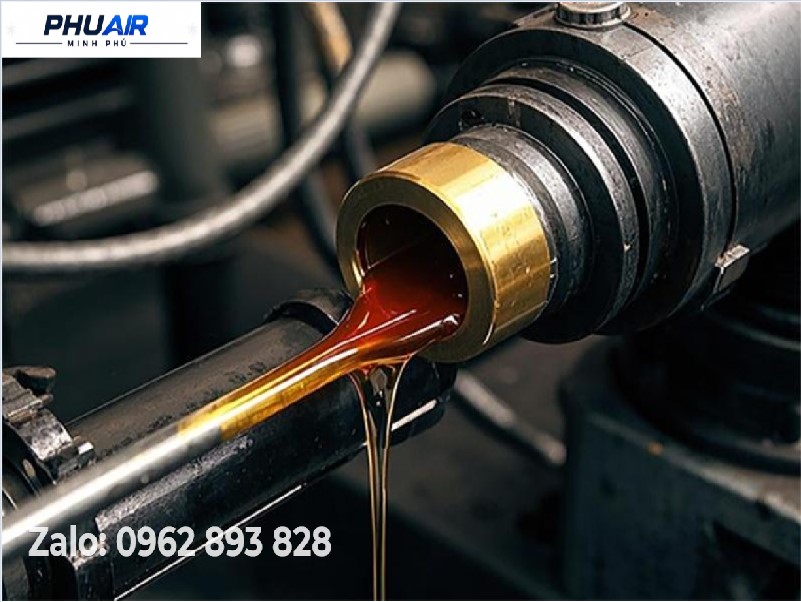
1. Oil Lines and Connections
Oil lines are among the first areas that should be inspected when a machine shows signs of oil leakage.
During operation, vibration can affect the connections. If a connection is no longer sealed properly or an oil line is damaged, oil may leak out and accumulate on surrounding components.
The difficulty is that oil often spreads along the machine housing, so the location where oil is visible may not be the actual source of the leak.
An appropriate inspection method is to clean the suspected area and then observe it again while the machine is operating. If oil reappears directly at a connection, inspect the connection and oil line before deciding whether replacement is necessary.
Do not tighten or disconnect oil lines while the system remains pressurized or components are still in an unsafe condition.
2. Sealing Gaskets at Mating Surfaces
Gaskets are designed to maintain a seal between mating surfaces.
After a period of operation, a gasket may harden, deform, or lose its sealing capability. Oil may then leak along the interface between two mating surfaces.
A common sign is oil forming a streak around the edge of a machine assembly. However, the point where the oil first appears must be identified before concluding that the gasket has failed.
If the gasket is confirmed as the cause, the usual corrective approach is to disassemble the assembly according to the proper procedure, inspect the contact surfaces, and replace the gasket with one that meets the machine's requirements.
Do not use substitute sealing materials indiscriminately without first confirming the technical requirements for that location.
3. Shaft Seals
Shaft seals require particular attention when oil appears around a rotating shaft.
The seal prevents oil from escaping where the shaft passes through the machine housing. If the seal deteriorates or the shaft surface develops a problem, oil may leak while the machine is operating.
If oil accumulates around the shaft and becomes more noticeable after the machine runs, the seal and related components should be inspected.
Do not replace the seal based solely on the visible location of the oil. Identify the leak source, inspect the condition of the relevant surfaces, and follow the disassembly and assembly procedures specified for the machine model.
4. Oil Filter Assembly
For machines equipped with an oil filter, the filter base and filter connections should also be inspected.
Oil may appear around the filter if it has been installed incorrectly, the sealing surface is defective, or the connection is not properly sealed.
If oil begins appearing around this area after a filter change, check the installation procedure and the type of filter used.
Do not conclude that the filter element itself is defective simply because oil is visible around the filter. Identify whether the oil originates from the threads, sealing surface, filter housing, or another location above it.
5. Oil Separator Assembly
For oil-injected screw air compressors, the oil separator assembly is an important component of the oil system.
If oil is found around the separator assembly, inspect the sealing points, mating joints, and condition of the assembly according to the machine's design.
It is important to distinguish between two conditions: oil leaking externally from the separator assembly and oil being carried into the compressed air.
If oil appears on the outside, the inspection should focus on sealing performance and connections. If oil appears in the compressed air, the oil separation performance and oil return system should be assessed. These two conditions should not be addressed in the same way.
6. Connections Throughout the Oil System
In addition to the main oil lines, the oil system contains various connection points, depending on the machine's design.
Oil may leak from fittings, valves, couplings, or joints between assemblies. In dusty workshop environments, oil that has leaked over a long period may form a thick layer of residue, making the original source difficult to identify.
During inspection, clean each area and monitor whether oil reappears while the machine is operating.
Do not ignore a small leak once it has been identified. Continuous oil loss over an extended period can lower the oil level and cause increasing contamination around the machine.
7. Crankcase and Compressor Head of a Piston Air Compressor
For piston air compressors, the crankcase and compressor head are areas to consider when oil leakage is detected.
Depending on the machine's design, oil may appear around mating surfaces, gaskets, or seals in the compressor head assembly. If oil accumulates around this area, identify the exact leak source before dismantling the machine.
In particular, do not confuse external oil leakage with oil consumption caused by an internal compressor head problem.
If a piston compressor both consumes excessive oil and exhibits symptoms such as slow pressure buildup, reduced compression performance, or abnormal operation, further inspection of the piston rings, piston, and cylinder may be warranted. The piston rings cannot be declared faulty simply because oil is visible on the outside of the machine.
Why Is Oil Visible on the Floor When the Leak Source Cannot Be Found?
This is a relatively common situation.
Oil may begin leaking from a higher location and then flow along the machine housing, piping, or other components before dripping onto the floor. Therefore, the location of an oil puddle is not necessarily the location of the fault.
A more effective inspection method is to identify the first point where oil appears.
First, stop the machine and implement the necessary safety measures. Then clean the oil from the suspected area. Once the machine is cleared for operation, observe where the oil reappears to identify the leak source.
If oil appears higher up and flows downward, inspect the upper area rather than focusing only on the point where it drips onto the floor.
8. Inspection Procedure for an Air Compressor with an Oil Leak
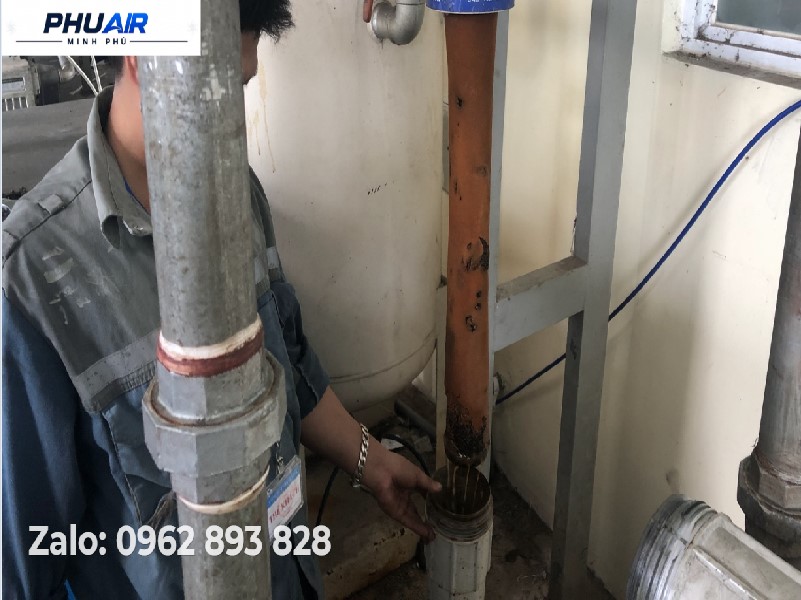
- Check the Oil Level
First, verify the oil level under the inspection conditions specified by the manufacturer. If the oil level drops rapidly, record the amount of oil added and the operating hours to establish a basis for assessment.
- Identify Where the Oil First Appears
Do not inspect only the area where oil has accumulated on the floor. Inspect from higher to lower areas to identify where the oil first begins to leak.
- Clean the Suspected Area
Old oil and dirt can conceal the source of a leak. Cleaning the area makes it easier to identify newly appearing oil.
- Monitor the Machine During Operation
After identifying the suspected locations, observe the machine under appropriate operating conditions to determine where oil reappears.
- Identify the Cause Before Replacing Components
Once the leak location has been identified, assess the condition of the gaskets, seals, oil lines, connections, or related components.
This approach helps prevent unnecessary component replacement based on assumptions.
Quick Diagnostic Table for Oil Leak Locations
Where Does the Oil Appear? | What Should Be Checked First? | What Should Not Be Concluded Immediately? |
|---|---|---|
Around the oil lines | Connections and oil line condition | That the oil line is definitely damaged |
Along a mating surface | Gasket and contact surfaces | That the gasket has definitely failed |
Around a rotating shaft | Seal and shaft surface | That only the seal needs replacing |
Around the oil filter | Sealing surface and connections | That the filter element is definitely faulty |
Around the oil separator assembly | Joints and sealing system | That the oil separator assembly must be replaced |
Along the machine housing | Areas above the visible oil | That the area where oil accumulates is the leak source |
Around the piston compressor head | Gaskets, seals, and compressor head condition | That the piston rings are definitely faulty |
Is an Air Compressor Oil Leak Dangerous?
An oil leak should not be treated as an issue that can be ignored.
If oil continues to escape, the oil level may drop and affect the machine's lubrication conditions, depending on the system design. Oil can also accumulate on the machine housing, workshop floor, or surrounding components, making cleaning more difficult and complicating the identification of other faults.
Particular caution is required if oil leaks near high-temperature components.
More importantly, if the machine shows signs of low oil, high temperature, abnormal noise, or operating alarms, do not continue running it for extended periods simply by adding oil without identifying the cause.
9. Common Mistakes When Addressing Air Compressor Oil Leaks
Wiping Away Oil Without Finding the Leak Source
Cleaning makes the machine look better but does not resolve the underlying cause. If the leak source is not identified, oil will continue to appear.
Inspecting Only the Spot Where Oil Drips onto the Floor
This is one reason diagnosis can go wrong. Identify where the oil first appears and trace its path.
Immediately Replacing a Seal or Gasket
Oil may originate elsewhere and flow toward a seal or gasket. Therefore, identify the leak source before replacing components.
Continuing to Add Oil Without Repairing the Leak
Adding oil only helps maintain the oil level temporarily. If the leak remains unresolved, oil will continue to escape.
Inspecting the Machine While It Is Still Pressurized or Hot
Detailed inspection work should be performed after the machine has stopped, energy sources have been isolated, and residual pressure has been released to a safe level. Work involving electrical systems and pressurized equipment must be carried out by appropriately qualified personnel.
10. When Should You Call a Technician?
If a small oil stain is found but the leak source cannot be identified, monitor the condition and locate the source rather than dismantling the machine unnecessarily.
If oil is leaking rapidly, the oil level drops abnormally, the machine overheats, or abnormal noise or vibration occurs, a technical inspection is necessary to determine the cause.
For industrial air compressors, correctly identifying the leak source at the outset is generally more important than replacing multiple components through trial and error.
11. Frequently Asked Questions About Air Compressor Oil Leaks
Does an Air Compressor Oil Leak Mean the Seal Must Be Replaced?
Not necessarily. Oil may leak from an oil line, connection, gasket, or another location before flowing toward the seal. Identify the source of the leak before replacing anything.
Why Is an Air Compressor Leaking Oil When the Source Cannot Be Identified?
Oil often travels along the machine housing and other components before dripping onto the floor. Old oil combined with dirt can also conceal the source. Cleaning the suspected area and monitoring it again during operation can help identify the leak more clearly.
Should an Air Compressor Be Stopped If Oil Is Leaking onto the Floor?
If a significant amount of oil is leaking, the oil level is dropping rapidly, or additional alarms and abnormal symptoms are present, do not continue operating the machine until the cause has been inspected. The decision to stop the machine should be based on the severity of the leak and its actual operating condition.
Can an Oil Leak in a Piston Air Compressor Be Caused by the Piston Rings?
This cannot be concluded without further inspection. Piston rings affect sealing inside the cylinder, whereas oil leaking externally may originate from gaskets, seals, or other sealing points.
Can You Retighten a Connection While the Air Compressor Is Leaking Oil?
Do not do so while the machine remains pressurized, is at a high temperature, or has not been isolated from its energy sources. Bring the machine to a safe condition before inspection and repair.
Conclusion
An air compressor oil leak must be traced to its actual source before any components are replaced.
The seven areas to inspect are oil lines and connections, sealing gaskets, shaft seals, the oil filter assembly, the oil separator assembly, connections within the oil system, and the crankcase or compressor head area on piston air compressors.
The key point is that the visible location of the oil is not necessarily the source of the leak. Oil may flow downward from above or spread across other components. Therefore, the appropriate procedure is to clean the area, monitor the machine during operation, and identify where the oil first reappears.
Once the leak source has been confirmed, the appropriate repair method and replacement components can be determined.
PhuAir Air Compressor Oil Leak Inspection and Repair Support
If your air compressor is leaking oil and the cause has not yet been identified, PhuAir can help inspect the actual condition and determine an appropriate troubleshooting approach for the machine type.
When contacting the technical team, provide the machine brand, model, photographs of the area where oil is visible, when the leak began, and the amount of oil that needs to be added. This information gives the technicians a better basis for an initial assessment before conducting an on-site inspection.