

Piston Air Compressor Fails to Build Pressure: 6 Causes You Need to Know
Article reviewed by PhuAir Technical Department - Updated: August 29, 2026
Piston air compressor continues to run but pressure does not increase, pressure builds very slowly, or the required pressure level cannot be reached is a common issue during operation. This condition causes compressed air-powered equipment to operate unstably, forces the compressor to run for longer periods, and may affect production efficiency.
So, why does a piston air compressor run but fail to build pressure? Unlike a screw air compressor (which uses a pair of intermeshing rotors), a piston compressor compresses air through the reciprocating motion of a piston inside a cylinder - therefore, the typical causes are often related to the suction valve, discharge valve, piston rings, piston, cylinder head gasket, air filter, or the piping and receiver. If you are using a screw air compressor, see the article [Screw Air Compressor Fails to Build Pressure]. If you are not sure whether the compressor is experiencing low pressure or complete pressure loss, you can also refer to the article [Screw Air Compressor Builds Pressure Slowly or Has Low Pressure].
The following article will help you identify the common causes and appropriate inspection methods.
Quick Answer
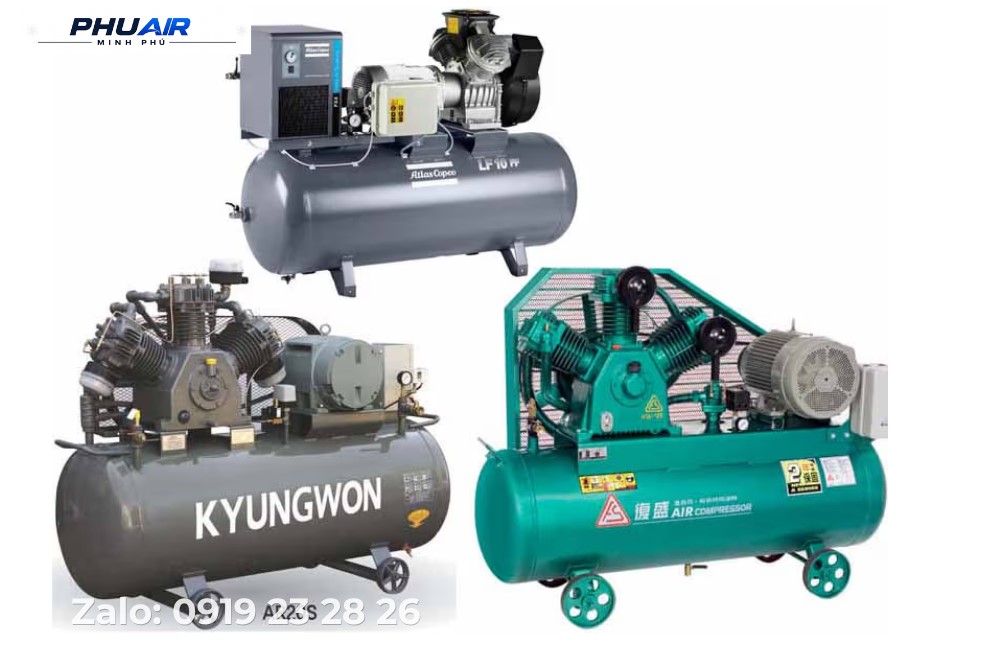
When a piston air compressor is running but fails to generate pressure or builds pressure very slowly, do not rush to disassemble the airend assembly. The first step is to clearly distinguish the condition (pressure at 0 bar or pressure increasing slowly), then inspect external causes such as piping leaks, a clogged air filter, or a stuck unloading mechanism. Only intervene in the intake/discharge valve assembly or piston rings after external factors have been ruled out, and strictly follow the energy isolation procedure.
QUICK DIAGNOSTIC SUMMARY TABLE
Actual Symptoms | Most Likely (Cause) | Priority Inspection Step |
|---|---|---|
Pressure gauge reads 0 bar while the compressor is running under load | Unloader valve stuck open, broken intake/discharge valve reed, or major piping leak. | Listen for air leakage, inspect the unloading assembly, and check the condition of the valve reed. |
Pressure builds very slowly, failing to reach the set level | Worn piston rings (blow-by), clogged air filter, loose drive belt. | Clean/replace the air filter, check belt tension, and assess piston ring wear. |
📌 Have you identified the suspected component? [View the corresponding genuine spare part codes here] or contact us via Zalo for quick consultation before placing an order.
1. Distinguishing the Conditions: Fails to Build Pressure vs. Builds Pressure Slowly
Correctly interpreting the pressure gauge reading will help narrow down the root cause accurately:
Compressor runs but pressure = 0 bar: Usually caused by a complete loss of compression capability (broken valve assembly), a faulty unloading mechanism that causes compressed air to discharge directly to the atmosphere, or a faulty pressure gauge.
Compressor builds pressure but very slowly: Usually caused by reduced compression efficiency (worn piston rings, dirty air filter, loose drive belt) or by the factory's air demand exceeding the generated flow rate.
2. External Inspection Sequence (Perform First)
Before intervening in the airend, perform the following inspections in sequence:
Compressed air system leakage: A large hole in the piping, air receiver (air storage tank), or a drain valve that is partially open can cause the entire amount of generated compressed air to be lost.
Clogged air filter: A dirty air filter reduces the airflow entering the compression chamber. Remove and clean or replace the air filter periodically.
Unloading mechanism / Pilot valve: For some piston compressor models equipped with an unloading mechanism or centrifugal pilot valve, if the push pin becomes stuck in the open position, the compressor will continue running unloaded and will be unable to compress air into the receiver.
3. Inspecting the Airend Assembly (Intake/Discharge Valves & Piston Rings)
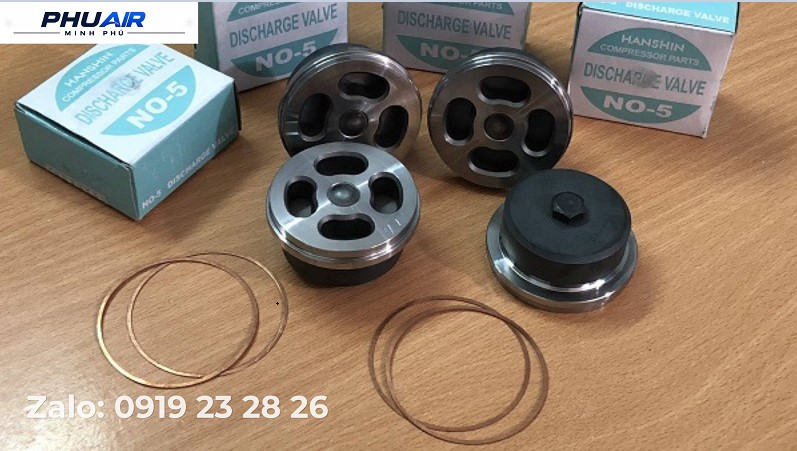
⚠️ SAFETY WARNING (LOTO): If no abnormalities are found during the external inspection, disassembly of the airend assembly must be performed by a qualified technician. It is mandatory to press STOP, switch off the circuit breaker, post a warning sign, and release all pressure in the receiver to 0 bar before beginning disassembly.
Damage to the intake/discharge valve assembly (Valve plates): The intake/discharge valve plates may be chipped, cracked, broken, or stuck due to carbon deposits. When the valve plates do not seal properly, compressed air will be forced back into the suction chamber instead of flowing into the receiver.
Piston ring and cylinder wear: When the piston rings are worn, the end gap exceeds the allowable limit, allowing compressed air to leak down into the crankcase. Note: After installing new piston rings, the compressor requires a run-in period in accordance with the manufacturer's recommendations so that the piston rings wear evenly and achieve maximum sealing performance.
Exceeding the duty cycle: Forcing the compressor to run continuously without rest to compensate for pressure loss (due to leakage or insufficient capacity) will cause overheating and accelerate damage to the compression chamber. The rated duty cycle specified for each compressor series must be followed.
4. Frequently Asked Questions (FAQ)
What should be checked first when a piston air compressor runs but fails to build pressure? First, check the pressure gauge, compressed air leakage, air filter condition, drive belt tension, and unloading mechanism (if equipped). If the external factors are normal, proceed with an in-depth inspection of the valve assembly and airend according to the technical documentation (service manual).
Can worn piston rings cause a piston compressor to build pressure slowly? Yes, they can. When the piston rings no longer provide adequate sealing, compressed air may leak past the piston into the crankcase, reducing compression efficiency. However, other simpler causes should be checked first before concluding that the piston rings are faulty.
5. Diagnostic Support from PhuAir
A compressor that fails to build pressure can result from multiple complex, interrelated causes. If you have performed a preliminary inspection but the issue has not been resolved, provide the relevant information so that PhuAir can assist you.
Quick Support Process: Please prepare and send the following information to the PhuAir technical department via Zalo:
Machine nameplate photo (aluminum nameplate clearly showing the Manufacturer and Model).
A photo or short video showing the pressure gauge while the compressor is running.
A brief description of when the problem started (suddenly or with pressure gradually decreasing over time).
The PhuAir technical team will cross-reference the information with the actual machine model to help safely narrow down the fault and recommend the most appropriate inspection and maintenance steps.