

Screw Air Compressor Builds Pressure Slowly or Has Low Pressure – Warning of Airend Failure?
Article reviewed by PhuAir Technical Department - Updated: August 29, 2026
A screw air compressor that builds pressure slowly, has low pressure, or fails to reach the maximum discharge pressure specified by its design is a very common operating issue in compressed air systems. Unlike a case where the compressor completely fails to generate pressure (0 bar) – see details in the article Screw Air Compressor Fails to Build Pressure – slow pressure build-up/low pressure is a partial performance degradation: the compressor still compresses air normally, but the output flow rate and pressure do not reach the designed levels.
This issue not only directly reduces the compressed air flow supplied to the production line, but also causes energy waste. A higher pressure setting than necessary to compensate, or pressure losses within the system, can significantly increase the factory's electricity consumption.
So, what causes a compressor to build pressure slowly? Which components should be inspected? When is repair required? Let's examine the details.
Quick Answer
A compressor that builds pressure slowly or has low pressure may be related to the compressor itself or to the compressed air system downstream of the compressor. The areas that need to be inspected include: air filter, inlet valve and control system, oil separator, airend, leaks, piping, and air demand.
⚠️ First, clearly distinguish between 2 cases:
Compressor does not reach the set pressure: Originates from the compressor itself → Focus on checking the compressor and its compression and air delivery capability.
Compressor reaches pressure but the end-use equipment has weak performance: Originates from the distribution infrastructure → Focus on checking the air receiver, piping, in-line filters, valves, and leakage points.
1. Signs of a Screw Air Compressor Building Pressure Slowly or Having Low Pressure
Physical Symptoms | Suspected Technical Component | Next Action |
|---|---|---|
System pressure drops significantly or fluctuates heavily when the factory operates at full load. | Air demand exceeds the compressor's flow capacity or there is significant leakage in the air lines. | Check suspected points using an appropriate leak detection method; then repair fittings and valves. Measure actual air consumption before concluding that the compressor capacity is insufficient. |
Pressure displayed on the control panel is low, but the mechanical gauge installed at the oil separator vessel shows high pressure. | Pressure sensor fault, incorrect measurement location; or clogged oil separator, stuck minimum pressure valve (MPV). | Check the sensor and wiring signal first. Then measure the oil separator differential pressure (dP) or inspect the MPV. |
Compressor motor runs continuously under load but cannot draw air into the air filter inlet. | Suction Valve is stuck in the fully closed position or only partially open. | Check the electrical signal supplied to the control solenoid valve; check operation of the suction valve piston. |
Mechanical gauge indicates normal oil separator vessel pressure, but the display shows a low-pressure fault. | Faulty pressure sensor or loose electrical signal connector. | Check the sensor wire terminal connection; replace the pressure sensor with a compatible unit. |
📌 Have you identified the suspected component? [View the corresponding genuine spare parts here] or contact us via Zalo for quick consultation before placing an order.
2. Causes of a Screw Air Compressor Building Pressure Slowly or Having Low Pressure
There are many possible causes of this condition. Do not focus only on the compressor; the entire system should be inspected from the compressor - air receiver - piping - air-consuming equipment.
Common causes include:
Dirty or clogged air filter.
Inlet/suction valve not operating correctly.
Faulty control solenoid valve.
Clogged oil separator with high differential pressure.
Airend wear.
Compressed air leakage in the distribution system.
Piping causing pressure drop.
Air demand exceeding the compressor's actual supply capacity.
3. A Dirty Air Filter Causes the Screw Air Compressor to Build Pressure Slowly
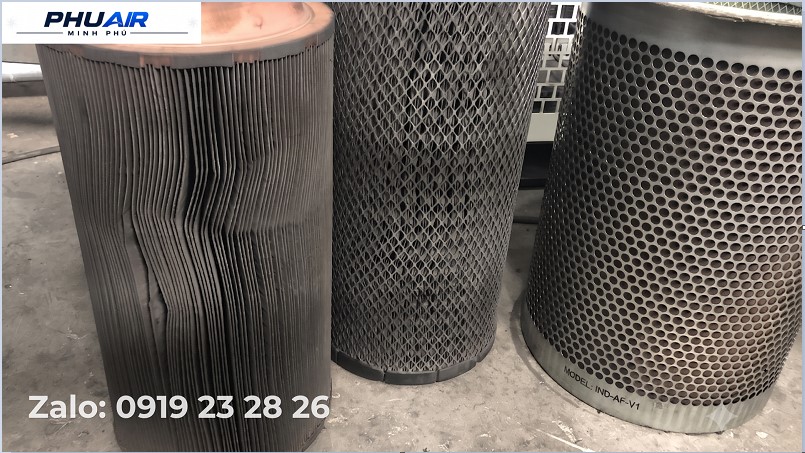
The air filter of a screw air compressor is responsible for filtering dust before the air enters the airend.
When the air filter is excessively dirty or clogged: The intake airflow decreases, resulting in reduced air output, causing the compressor to build pressure slowly or fail to reach the required pressure.
This is particularly common with compressors operating in dusty environments (woodworking plants, cement plants, mechanical workshops, steel plants), where the air filter can quickly accumulate dust.
Recommended action: Check the condition of the air filter periodically. If the filter element is excessively dirty or can no longer provide adequate filtration performance, replace it with a new air filter of the correct type and compatible with the machine model.
4. Screw Air Compressor Inlet Valve Not Operating Correctly
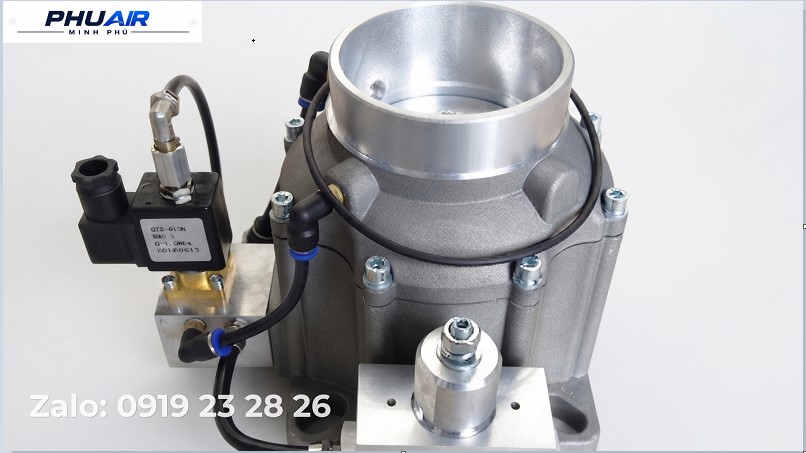
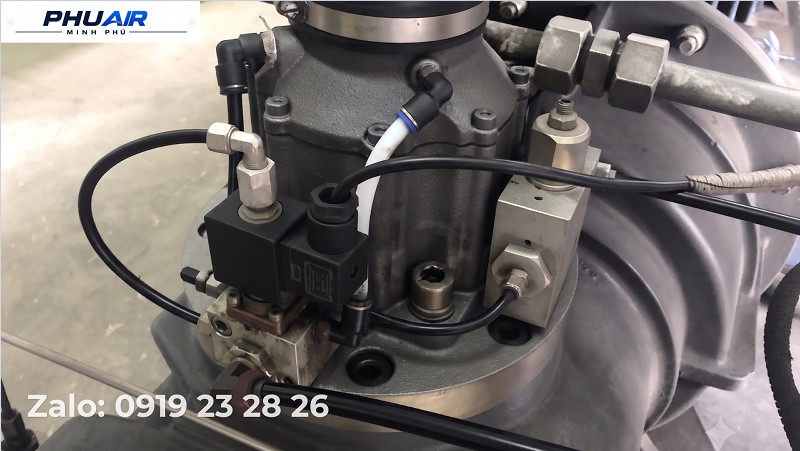
The inlet valve or suction valve (inlet valve) regulates the amount of air entering the airend.
If the valve is stuck, contaminated, has a damaged seal, does not complete its full stroke, or is not controlled accurately, the amount of air entering the airend may be insufficient. As a result, the compressor continues to operate, but its air flow generation capacity decreases, causing slow pressure build-up or failure to reach the set pressure.
5. Oil Separator Clogged, High Differential Pressure
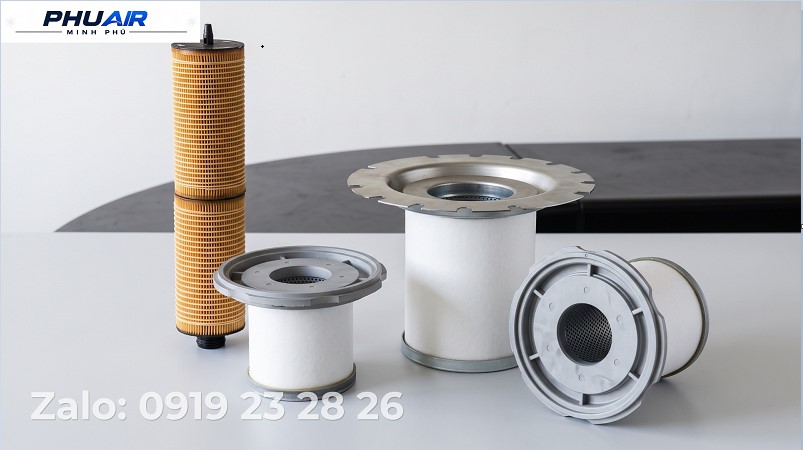
The oil separator is responsible for separating oil from the air-oil mixture after the compression process. When the oil separator is dirty or its differential pressure increases significantly, the system may experience restricted air circulation and obstructed air discharge. High pressure loss across the filter directly reduces the compressed air outlet pressure, affecting compressor efficiency.
Check the service life of the oil separator, the differential pressure across the separator, and the actual condition of the filter element.
6. Compressed Air Leakage Causes Low Pressure at the Point of Use
Not every case of low pressure is caused by a compressor failure. A very common issue is compressed air leakage in the piping system.
Air is continuously lost through fittings, valves, flexible hoses, quick couplings, or cracked pipes, resulting in a significant pressure drop at the point-of-use equipment. Air leakage not only causes pressure loss but also forces the compressor to run under load more frequently to compensate for the lost air.
7. Compressed Air Piping Causes Pressure Drop
If the compressor still reaches the required pressure but the equipment at the end of the piping receives low pressure, the cause is usually within the distribution system:
Piping is too small or too long for the required flow rate.
Piping design includes too many bends, elbows, or sharp turns.
In-line filters (coarse/fine filters) are dirty or clogged.
The flow demand at a particular time on that branch of the piping system is too high.
8. Air Demand Exceeds Compressor Capacity
A factory may previously have had sufficient air supply, but after expanding the production line and adding equipment while keeping the same existing compressor, the following condition may occur: Increased air demand > compressor supply flow rate → compressor runs continuously under load → pressure fails to reach the rated level → compressor builds pressure slowly and has low pressure.
In this case, replacing filters or servicing the valve will not completely resolve the problem. You need to reassess the total required air flow against the current compressor capacity to determine an appropriate upgrade solution.
9. Airend Wear Reduces Efficiency
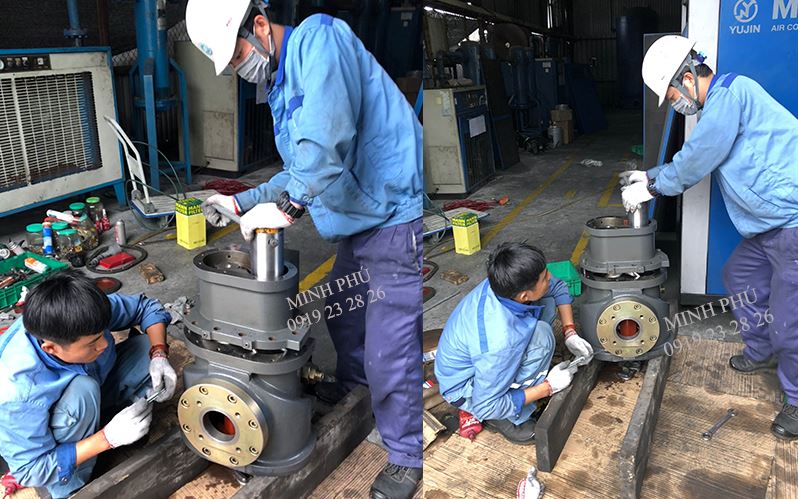
For compressors that have been operating for many years, the clearances between the screw rotors inside the airend may increase due to mechanical wear, causing compressed air to flow back (internal recirculation), thereby reducing compression efficiency. Symptoms include slow pressure build-up, prolonged loaded operation, and increased operating temperature.
Note: Do not immediately conclude that the airend is worn solely based on the number of years in service. Actual flow rate, pressure, temperature, motor current, and other relevant parameters should be evaluated before deciding on a costly overhaul.
10. How to Check a Screw Air Compressor That Builds Pressure Slowly or Has Low Pressure
🛑 Safety Note: Any disassembly or inspection inside the machine housing must only be performed after the compressor has come to a complete stop, the power supply has been isolated, and all pressure in the oil separator vessel has been fully released to 0 bar in accordance with the manufacturer's procedure. Electrical measurements or operations performed while the compressor is running must be carried out by qualified technical personnel.
Recommended inspection sequence:
Step 1: Check pressure: Determine the set pressure and the actual pressure achieved, and compare whether the pressure build-up time is longer than before.
Step 2: Check the air filter: Remove the air filter housing cover and check whether it is clogged with dust or overdue for replacement.
Step 3: Check the inlet valve: Observe the opening/closing operation of the inlet valve butterfly/piston when the compressor receives the load signal.
Step 4: Check the oil separator: Monitor the differential pressure across the filter on the display (if available) or through the oil separator vessel pressure gauge.
Step 5: Check for leaks: Inspect along the piping route from the receiver to the air-consuming equipment.
Step 6: Assess air demand: Make a preliminary calculation of the total air consumption of the operating equipment and compare it with the compressor capacity.
Step 7: Perform an in-depth assessment: If the external checks are normal, inspect for airend wear or electronic control system issues.
11. Does Slow Pressure Build-Up Cause Higher Electricity Consumption?
Definitely. When the compressor has to remain loaded for longer than normal just to reach the required pressure level, the duration of maximum current consumption increases. In particular, if the cause is piping leakage, the compressor will continuously consume electricity to supply air and compensate for the leaked air. Early detection and corrective action can significantly reduce the factory's monthly electricity costs.
12. When Should You Call a Compressor Repair Technician?
You should request assistance from a qualified service provider if:
Pressure drops suddenly and fluctuates abnormally.
The compressor runs under load 100% of the time but cannot reach the set pressure.
The air filter and oil separator have been replaced according to the maintenance schedule, but pressure remains low.
Airend noise is excessive and the compressor temperature increases abnormally.
Never arbitrarily adjust safety valves or minimum pressure valves, or remove pressurized hoses without fully understanding their operating principles.
13. PhuAir Supports Inspection and Troubleshooting of Low-Pressure Compressors
Trial-and-error troubleshooting can result in unnecessary spare parts replacement costs. PhuAir's engineering team is equipped with specialized measurement equipment and supports flow measurement, differential pressure measurement, and systematic inspection of system faults with precision.
📞 Need troubleshooting support? Send the following information to PhuAir via Zalo:
Machine model + Power rating.
Photos/videos of the current pressure gauge reading and display screen (if any fault code is shown).
The technical team at PhuAir will use the actual information to help narrow down the cause and recommend the most appropriate inspection and corrective steps for your system!
FAQ - Frequently Asked Questions
Why does the compressor build pressure slowly even though the display shows no fault?
The cause may very likely be in the mechanical system outside the sensor monitoring range (such as a dirty air filter, mechanically stuck inlet valve, or significant air leakage in the piping). The display only indicates a fault when a parameter exceeds the configured safety limit (such as excessive temperature or motor overcurrent).
Why does the compressor reach the required pressure, but the air at the spray gun/equipment is weak?
In this case, 90% of the problem is likely to be in the distribution system. You should check the in-line filters (the filter element may be clogged with water/contaminated oil), whether the piping size is too small and creating a bottleneck, or whether the flexible air hose connected to the spray gun is kinked or leaking.
How often should the air filter and oil separator be checked to prevent pressure loss?
As a general recommendation, the air filter should be blown clean after every 500 hours and replaced after 2,000 - 3,000 hours. The oil separator should be replaced after 3,000 - 4,000 hours (depending on the operating environment and type of oil used). Maintenance history should be recorded to facilitate troubleshooting when problems occur.
When should airend wear be inspected?
When the compressor has operated for more than 24,000 - 40,000 hours (depending on the manufacturer), or when you notice that the compressor runs continuously under load, fails to reach the required pressure, operating temperature rises significantly, or there is metallic mechanical rubbing noise inside the compression chamber despite proper oil and filter maintenance. At this point, contact a professional technician to measure the clearances and overhaul the airend bearings.