

Piston Air Compressor Overheating: Causes and Solutions
Quick Answer:
An overheating piston air compressor (extremely hot compressor head, burning smell, foaming oil, burned seals, or thermal overload relay tripping) may experience reduced efficiency, rapid deterioration of lubricating oil, abnormal noise, or shutdown due to thermal protection. Common causes include dirty cooling fins or a contaminated cooling system, insufficient or degraded lubricating oil, a clogged intake air filter, faulty intake or discharge valve plates causing air leakage, worn piston rings, pistons or cylinders, continuous overloading beyond the permitted duty cycle, poor ventilation in the compressor room, or problems with the drive belt or transmission mechanism. However, a hot compressor head does not automatically mean the machine is damaged. The cause should be investigated systematically by checking lubrication, heat dissipation, operating conditions, and the valves and moving components inside the compressor head, rather than continuing to operate the machine or replacing components based on guesswork.
Unlike screw air compressors, which use a dedicated oil cooler, piston air compressors dissipate heat primarily through the aluminum cooling fins on the cylinder heads, combined with airflow generated by the pulley and the surrounding environment. This is why piston air compressors are often more sensitive to overloading, insufficient oil, and dirty air filters than screw air compressors.
Is an Overheating Piston Air Compressor Dangerous?
It can be dangerous if the temperature rises abnormally and the machine continues operating. A piston compressor head generates heat during air compression. When the cooling or lubrication system is inadequate, heat accumulates and the temperature rises above normal levels. When the compressor head temperature increases sharply, the viscosity of the lubricating oil decreases, increasing the risk of piston seizure, cylinder scoring, or burned seals, which can result in substantial repair costs.
If the machine continues operating under these conditions, it may experience rapid lubricating oil deterioration, increased heat and friction affecting moving components, damage to piston rings, pistons, or cylinders, unstable intake or discharge valve operation, reduced pressure-building capacity, unusual knocking or other abnormal noises, and shutdown triggered by thermal protection.
Note: Do not conclude that the machine is overheating solely by looking at the external temperature of the compressor head. Consider the oil condition, cooling performance, machine load, pressure, and other abnormal symptoms together.
1. Signs That a Piston Air Compressor May Have a Temperature-Related Problem
Symptom | Data to Check | Inspection Approach |
|---|---|---|
Abnormally hot compressor head, burning smell, foaming oil, or burned seals | Actual temperature and ambient conditions | Compare with the model's normal operating conditions |
Machine runs for a long time while the temperature continues to rise | Operating duration, load, and pressure | Check machine load and heat-dissipation performance |
Lubricating oil deteriorates rapidly | Oil level and condition | Check the oil type and lubrication condition |
Machine produces unusual noises | Knocking, whistling, or vibration | Inspect the piston, piston rings, bearings, and drive mechanism |
Pressure and pressure-building time | Inspect valves, piston rings, cylinder, and air leaks | |
Machine shuts down due to thermal protection (thermal overload relay trips) | Alarm history, if available | Identify the cause before resetting the protection device and restarting |
2. Causes of High Temperatures in Piston Air Compressors
1. Dirty Cooling System or Poor Heat Dissipation
Piston compressor heads typically have cooling fins on the cylinder body and cylinder head. Over time, dust, oil, and other contaminants can accumulate on these surfaces, reducing heat exchange with the surrounding environment. In dusty environments, a thick layer of accumulated dirt can cause more heat to build up if the cooling fins are not cleaned regularly.
Check whether the cooling fins are covered in dust, whether oil or other contaminants have accumulated on their surfaces, whether the area around the compressor head is adequately ventilated, and whether the cooling airflow is obstructed. The recommended solution is to clean the cooling fins and surrounding area using a method appropriate for the machine's design.
2. Insufficient or Unsuitable Lubricating Oil
Lubricating oil reduces friction and helps dissipate heat from moving components. When the oil level is low (below the permitted mark in the crankcase) or the oil has exceeded its service life, it may no longer provide adequate lubrication and heat dissipation, causing friction between the piston and cylinder to increase.
Pay attention to the type of oil being used, its condition, whether it has deteriorated or become contaminated, and whether oil leakage is present. Do not add an arbitrary type of oil simply because the level is low. Use the oil specified by the manufacturer. Depending on operating intensity and working conditions, oil should generally be changed every 500–1,000 operating hours to help maintain effective lubrication and heat dissipation.
3. Clogged Intake Air Filter
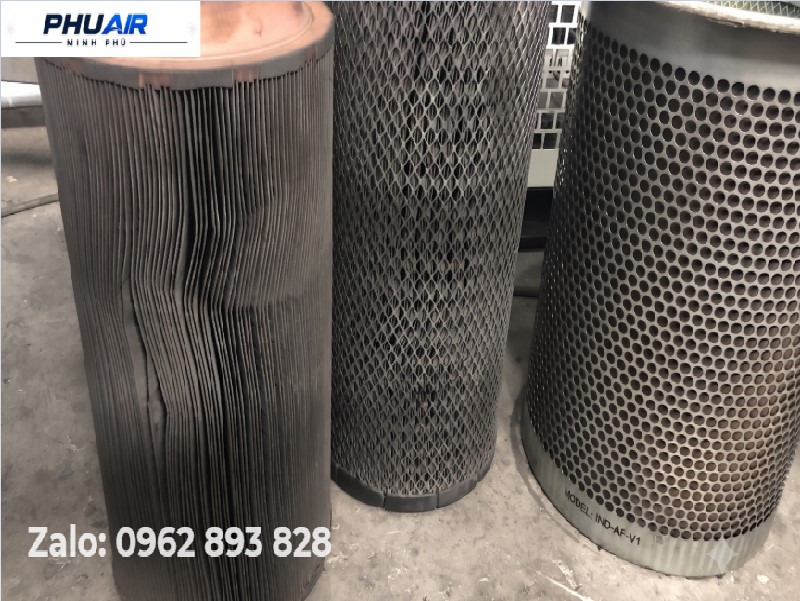
Dust buildup that completely clogs the air filter restricts the supply of fresh air entering the compressor head, reducing efficiency and increasing localized thermal stress in the compressor head. This cause is easy to overlook because it is not directly related to the oil or internal mechanical components. However, it is also easy to inspect and address.
Check whether the air filter has a thick layer of dust, whether it has reached its cleaning or replacement interval, and whether the intake airflow is noticeably restricted.
4. Intake and Discharge Valve Plate Assembly Not Operating Properly
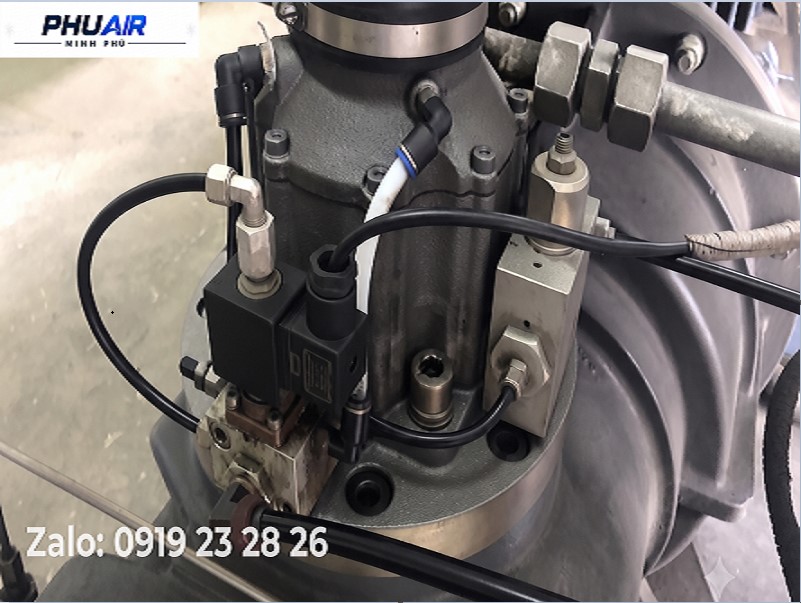
The intake and discharge valves in a piston compressor head play an important role in the air intake, compression, and discharge processes. If the valve plates become coated with carbon deposits, stick, bend or deform, crack, break, or fail to seal properly, hot compressed air may flow back and forth inside the compression chamber instead of being discharged correctly according to the operating cycle. This can cause the compressor head to overheat rapidly. The machine may exhibit several symptoms simultaneously: rising temperature, poor pressure buildup, unusual noises, and reduced efficiency.
Therefore, when a piston air compressor overheats abnormally and fails to build pressure, the valve assembly should be included among the priority items for inspection.
5. Worn or Stuck Piston Rings
Piston rings help seal the gap between the piston and the cylinder wall. When the rings are worn, stuck, or unable to seal properly, more compressed air may leak past the piston. The sequence is as follows: poor sealing → air leakage past the piston → reduced compression efficiency → longer operating time → increased heat generation.
Associated symptoms may include slow pressure buildup, longer-than-normal operating times, reduced airflow, signs of abnormal oil consumption, and a hotter compressor head under the same operating conditions. If worn piston rings are suspected, do not replace them immediately without further inspection. Check the condition of the piston and cylinder walls as well to identify the actual cause.
6. Worn Cylinder or Piston
If the cylinder is worn or the piston's working surface has a problem, the compression chamber may no longer seal properly. As a result, the machine may struggle to build pressure, run for extended periods, overheat abnormally, and produce unusual noises or vibration. These causes require a more in-depth inspection, particularly if the machine has been operating for a long time.
7. High-Load Operation or Excessively Long Operating Periods
Piston air compressors are generally designed for an optimal duty cycle, for example, approximately 60% running time and 40% rest time during each cycle. If the machine is forced to run continuously at nearly 100% capacity for an extended period without sufficient rest time for heat dissipation, heat will accumulate and may exceed the permitted limit.
Consider the following factors: how long the machine runs during each cycle, the frequency of starting and stopping, operating pressure, actual compressed air demand, and whether the machine must run continuously. The compressor's temperature should not be assessed separately from its load conditions and operating cycle.
8. Excessively High Ambient Temperature or Poor Ventilation in the Compressor Room
If the machine is installed in an enclosed space, exposed to high ambient temperatures, or surrounded by hot air that cannot escape, its heat-dissipation capacity will decrease. The sequence is as follows: the machine operates normally → the compressor room gradually heats up → heat dissipation decreases → compressor head temperature rises. Therefore, when troubleshooting an overheating piston air compressor, inspect the surrounding environment as well as the compressor head itself.
9. Problems with the Drive Belt or Drive Mechanism
For piston air compressors driven by belts, the condition of the belts and pulleys should also be checked. Overly tight, slipping, or worn belts, or incorrect installation, can affect power transmission and cause abnormal noise, vibration, or heat. If the machine exhibits overheating, vibration, and unusual noises simultaneously, do not overlook these mechanical causes.
3. How to Inspect an Overheating Piston Air Compressor
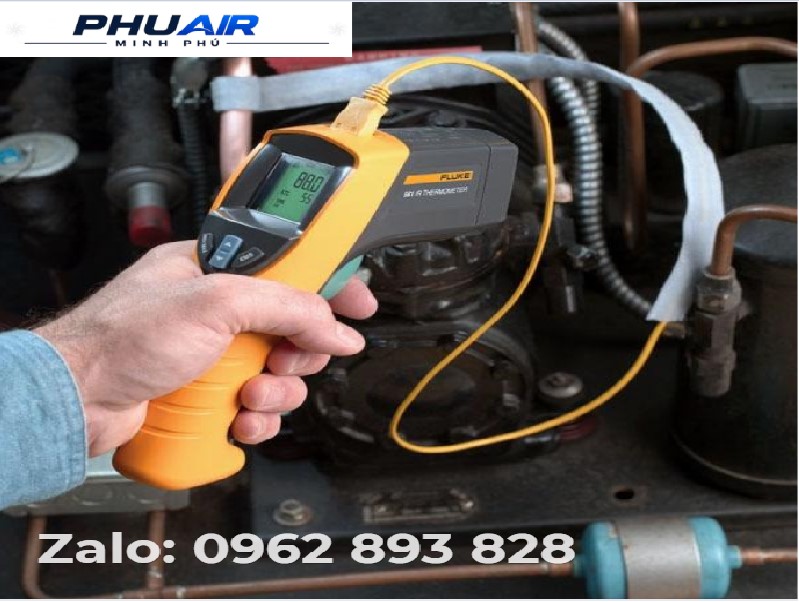
The compressor head should not be disassembled immediately when the machine shows signs of overheating. Inspections can be carried out in a sequence, starting with the simplest checks and progressing to more advanced ones.
Step 1 - Stop the machine and ensure safety: Disconnect the power supply, isolate energy sources according to the safety procedure, release all remaining pressure in the air receiver and system to a safe level, and allow hot components to cool before approaching them. Do not open the compressor head while the system is still pressurized. If electrical components, capacitors, relays, or the control cabinet need to be inspected, the work should be performed by qualified personnel.
Step 2 - Inspect the external condition: Examine the compressor head, cooling fins, air filter, belts, pulleys, and the area around the machine. Look for oil leaks, unusual oil deposits, abnormal noise, and vibration while the machine is running. The purpose of this step is to quickly determine whether the problem is more likely related to heat dissipation, lubrication, air intake, or mechanical components.
Step 3 - Check the lubricating oil: Check the oil level, color, and condition; look for signs of insufficient oil or leakage; verify that the oil type meets the machine's requirements; and check the operating hours since the last oil change. If the oil shows abnormal signs, identify the cause before continuing operation.
Step 4 - Check the air filter: Determine whether the filter is excessively dirty and whether it has reached its cleaning or replacement interval. Address this issue before proceeding to inspect components inside the compressor head.
Step 5 - Inspect the intake and discharge valves: If the machine overheats, builds pressure slowly, and delivers reduced airflow, inspect the valve assemblies. Pay particular attention to carbon deposits or accumulated residue, stuck valves, bent valve plates, cracked or broken valve plates, and valve sealing surfaces that do not seal properly. Valve assembly disassembly and inspection must follow the design specifications of the particular compressor model.
Step 6 - Inspect the piston, piston rings, and cylinder: If the preceding steps do not reveal the cause, conduct a more in-depth inspection of the piston rings, piston, cylinder walls, compression chamber sealing, and signs of abnormal wear. These inspections should be performed by qualified technicians, particularly when compressor head disassembly is required.
4. Quick Diagnostic Table for an Overheating Piston Air Compressor
Accompanying Symptom | Primary Cause to Check |
|---|---|
Overheating + heavy dust on the compressor head | Dirty cooling fins |
Overheating + low oil level | Oil level and lubrication |
Overheating + weak air intake | Clogged air filter |
Overheating + slow pressure buildup | Valves, piston rings, and cylinder |
Overheating + knocking noise | Piston, piston rings, bearings, or drive mechanism |
Overheating + vibration | Belts, pulleys, bearings, or mechanical components |
Overheating + prolonged operation with almost no rest | Load conditions and operating cycle exceeding the design limits (e.g., exceeding a 60/40 duty cycle) |
Overheating + poor ventilation in the compressor room | Ventilation and ambient heat dissipation |
Overheating + abnormal oil condition | Oil quality, oil type, or lubrication problems |
This table is intended to guide inspections and does not replace the diagnostic procedure for the specific compressor model.
Should you continue running a piston air compressor when it overheats?
Do not allow the machine to continue running for an extended period if its temperature is rising abnormally and the cause has not been identified. Stop the machine for inspection, especially if any of the following occur together: rapidly rising temperature, knocking or unusual metallic noises, severe vibration, a burning smell, abnormal oil behavior (foaming or burned seals), failure to build pressure, or activation of the thermal protection device (thermal overload relay).
A minor fault in the cooling system or air filter may be relatively straightforward to resolve. However, prolonged operation under overheating conditions can lead to mechanical damage, such as piston seizure, cylinder scoring, and burned seals, or may require a complete compressor head overhaul.
5. Mistakes to Avoid When a Piston Air Compressor Overheats
Cleaning only the exterior, such as the cooling fins and air filter, before restarting the machine: If the cause lies in the valves, piston rings, cylinder, or lubrication system, external cleaning will not resolve the problem.
Adding oil immediately when the oil level is low: Verify the correct oil type and identify why the oil level has dropped before topping it up.
Repeatedly restarting the machine after thermal protection trips: Resetting the protection device and restarting the machine multiple times without identifying the cause may make the problem more serious.
Disassembling the compressor head while the system is still pressurized: This presents a serious safety risk. Isolate the energy source and release the pressure before opening pressurized components.
Concluding that the piston rings are faulty simply because the machine is overheating: High temperature can have many causes. Diagnosis should take into account temperature, pressure, operating duration, oil condition, noise, vibration, and pressure-building performance.
Installing an auxiliary cooling fan as the only solution: An additional external cooling fan may provide some assistance, but it will not fully resolve the problem if the root cause is insufficient oil, overloading, or damaged internal valve plates.
6. Frequently Asked Questions (FAQ)
1. Why does a piston air compressor overheat quickly?
Possible causes include dirty cooling fins, insufficient or incorrect lubricating oil, a clogged air filter, poor ventilation, excessive load or continuous operation beyond the permitted duty cycle, malfunctioning intake or discharge valves, or wear of the piston, piston rings, and cylinder. Inspect each group of components systematically rather than replacing parts immediately.
2. Is it normal for a piston air compressor to overheat while still building pressure?
This cannot be determined solely from the fact that the machine is still building pressure. Compare its performance with the machine's normal operating conditions and check the temperature, operating duration, oil, cooling system, and any abnormal symptoms.
3. What should be checked first if a piston air compressor overheats and fails to build pressure?
Prioritize inspecting the intake and discharge valves, piston rings, piston and cylinder, oil condition, and potential air leakage points. If the machine is both overheating and building pressure slowly, do not focus exclusively on the cooling system.
4. How often should the cooling fins of a piston air compressor be cleaned?
A single fixed interval should not be applied to every machine. Cleaning frequency depends on the working environment, dust levels, and operating conditions. Machines operating in dusty environments require more frequent inspections.
5. How often should the oil in a piston air compressor be changed to prevent overheating?
Depending on operating intensity and working conditions, oil should generally be changed every 500–1,000 operating hours to help maintain effective lubrication and heat dissipation.
6. Should an external cooling fan be installed on an overheating piston air compressor?
An auxiliary cooling fan may provide some additional cooling. However, it will not fully resolve the problem if the root cause is insufficient oil, overloading, or damaged internal valve plates. Identify the underlying cause before taking corrective action.
7. Can a piston air compressor continue operating when it triggers a high-temperature alarm?
Do not ignore a temperature warning. Stop the machine, ensure safety, identify the cause, and resolve the problem before returning the machine to normal operation.
Conclusion
An overheating piston air compressor does not necessarily mean that the compressor head has failed. The cause may be a relatively simple issue, such as dirty cooling fins, a clogged air filter, poor ventilation, or inadequate oil condition. However, it may also involve the intake or discharge valves, piston rings, piston, cylinder, or operation beyond the permitted duty cycle.
The most effective approach is to avoid replacing components based on guesswork and instead follow a systematic inspection sequence: Safety → Operating conditions and duty cycle → Cooling → Air filter → Oil → Valves → Piston, piston rings, and cylinder assembly → Test run and monitoring.
PhuAir provides inspection services for piston air compressors experiencing high temperatures.
If your compressor is overheating, building pressure slowly, running for extended periods, or frequently shutting down due to high temperature, please provide PhuAir with the following information:
📷 Compressor model and a photo of the nameplate
⚙️ Motor power and operating pressure
⏱️ Operating time before overheating and pressure-building symptoms
🛢️ Oil condition, including oil level, color, and replacement history
🖼️ Photos of the compressor head, cooling fins, and air filter
This information helps technicians narrow down the likely cause more accurately instead of replacing spare parts based on guesswork.