

Screw Air Compressor Intake Valve Fails to Open: Causes and Solutions
Reviewed by the PhuAir Technical Department – Updated: September 10, 2026
Quick Answer: If the intake valve (air inlet valve) of a screw air compressor fails to open when the machine switches to the loaded (Load) mode, the compressor may fail to draw in any air, the pressure reading on the display may not increase, or the machine may continue running in the unloaded (Unload) state. The main causes include the load-control solenoid valve failing to open, a blocked or leaking control air line, insufficient control air pressure, or a piston and spring inside the intake valve body becoming stuck due to dirt buildup. Do not conclude that the intake valve is faulty simply because the compressor fails to build pressure. Distinguish this issue from problems involving the air filter, solenoid valve, pressure sensor, oil separator, air leaks, piping, or air demand exceeding the compressor's supply capacity.
Common Symptoms Table
Symptom | Suspected Area | Data to Check | Recommended Action |
|---|---|---|---|
The compressor switches to Load mode, but pressure remains unchanged and there is no strong intake airflow sound at the valve opening | Intake valve, solenoid valve | Solenoid valve operating status and control air pressure | Inspect the solenoid valve → control air line → intake valve piston mechanism |
The compressor builds pressure very slowly | Intake valve, air filter, solenoid valve, etc. | Pressure and time required to build pressure | Follow the diagnostic sequence |
The intake valve opens only partially | Intake valve/piston | Valve stroke and movement | Inspect the valve mechanism |
The valve does not receive an opening command | Solenoid valve/control signal | Signal supplied to the solenoid valve | Inspect the control circuit and control air line |
The display indicates low pressure while the mechanical gauge still shows a high reading | Pressure sensor | Compare the two pressure readings | Inspect the sensor and signal wiring |
According to PhuAir, when the air compressor runs continuously under load but fails to draw air through the air filter inlet, one direct possibility is that the intake valve is stuck fully closed or only partially open. In this case, check the electrical signal supplied to the control solenoid valve and the operation of the intake valve piston. The air filter, intake valve, solenoid valve, oil separator, Airend, air leaks, piping, and air demand should all be considered when the compressor builds pressure slowly or delivers insufficient pressure.
1. What Is the Function of a Screw Air Compressor Intake Valve?
During screw air compressor operation, air must enter the Airend for compression to take place. The intake valve/inlet valve regulates the airflow entering the Airend according to the machine's operating state.
If the intake valve fails to open, opens only partially, becomes stuck, does not receive a control signal, or has a piston mechanism that does not operate correctly, the amount of air entering the Airend may be restricted. As a result, the motor may continue running while the compressor fails to produce the required amount of compressed air.
2. Why Should You Avoid Jumping to Conclusions When the Intake Valve Fails to Open?
In a screw compressed air system, the intake valve acts as the “gateway” that determines the amount of air entering the Airend. When the intake valve fails to open, some people immediately conclude that the valve is faulty and replace the entire assembly. However, the root cause may simply be an electrical signal problem affecting the solenoid valve, a problem with the control air line, or insufficient control air pressure to push the intake valve piston open. The troubleshooting procedure should always involve checking each stage using actual operating data rather than making assumptions.
3. Causes of an Intake Valve That Fails to Open
1. The Load-Control Solenoid Valve Is Not Operating
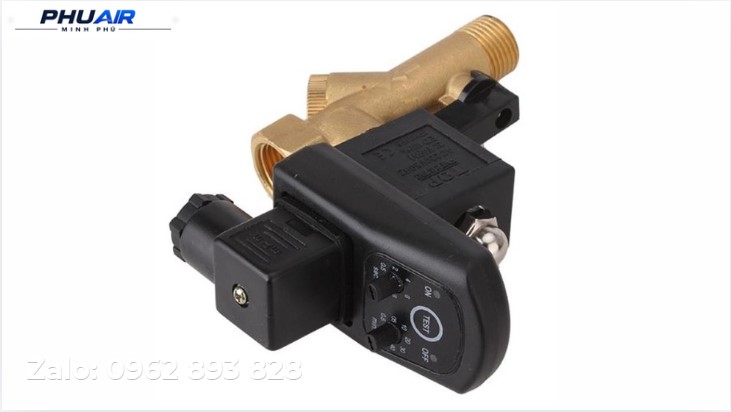
The intake valve issue may not be limited to the valve mechanism itself; the control system must also be inspected. When the compressor runs under load but fails to draw in air, first check the electrical signal supplied to the control solenoid valve, then inspect the operation of the intake valve piston.
How to inspect: Determine whether the solenoid valve receives an electrical signal when the compressor switches to Load mode (check whether the indicator light illuminates or use a voltage tester) and whether a “click” can be heard when the valve actuates. If the solenoid coil is burned out or the valve core is stuck, control air cannot pass through to open the intake valve.
The specific standard voltage/signal must be verified against the machine model [NEEDS VERIFICATION].
Key question: Is the valve failing to open because the valve itself is stuck, or because it is not receiving a control command? This distinction is important to avoid replacing the wrong component.
2. The Control Air Line Is Blocked, Leaking, or Operating at Insufficient Pressure
Many screw air compressor models use compressed air-not just an electrical signal-to push the intake valve piston open. If the control air pressure is insufficient, or the control air line running from the solenoid valve to the intake valve assembly is kinked, twisted, leaking, or blocked by contaminated oil or condensate, the intake valve piston will not receive enough force to open, even if the solenoid valve is operating correctly.
How to inspect: Check the control air lines for kinks, twisting, leaks, or blockages. Measure the actual control air pressure if suitable equipment is available.
3. The Intake Valve Is Mechanically Stuck
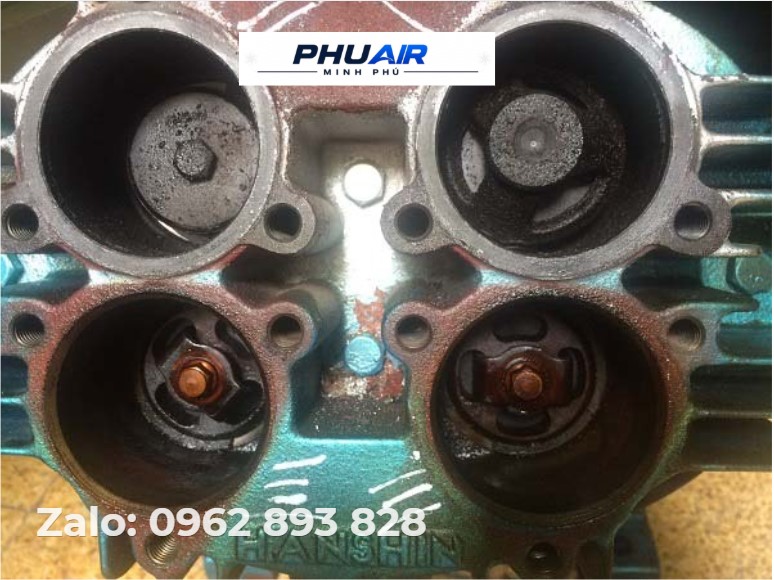
The valve mechanism may develop problems that cause the valve to remain closed, open only partially, or fail to move through its full stroke correctly. In such cases, even while the compressor is running, the amount of air entering the Airend remains insufficient. Common causes include a stuck intake valve piston, return spring, or valve diaphragm due to carbon deposits or dirt buildup, or a torn sealing gasket that prevents the piston from moving.
How to inspect: Check the mechanical condition of the valve, the movement of the valve piston, the opening and closing stroke, and any areas showing signs of sticking or abnormal operation. Do not remove the valve before identifying the likely cause. Follow the diagnostic sequence: electrical signal → control air line/pressure → internal piston and spring mechanism of the intake valve.
4. A Dirty Air Filter Can Also Restrict Air Intake
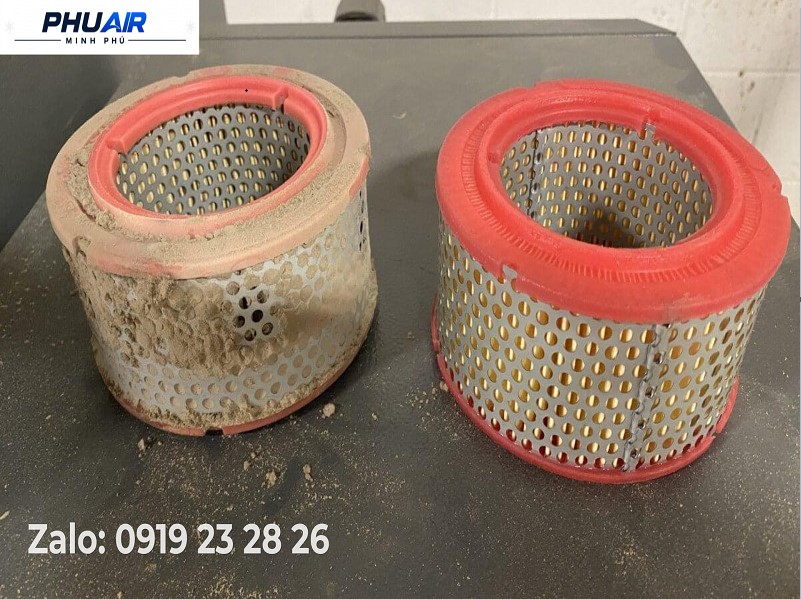
Not every case of weak air intake in a screw air compressor is caused by the intake valve. If the air filter is dirty or clogged, the incoming airflow will also be restricted. A dirty or clogged air filter is one of the factors that can cause the compressor to build pressure slowly or deliver insufficient pressure.
Checks to perform before removing the intake valve: Is the air filter excessively dirty? Has it reached its scheduled maintenance or replacement interval? Is the air intake path obstructed? Are there any abnormal signs around the intake port?
4. The Intake Valve Opens but the Compressor Still Fails to Build Pressure: What Should You Check?
If you have confirmed that the intake valve is open but the compressor still builds pressure slowly or delivers insufficient pressure, you should not focus exclusively on the intake valve. Other potential causes include:
A clogged oil separator – High differential pressure may be associated with a discrepancy between the displayed pressure and the actual pressure.
A problem with the Minimum Pressure Valve (MPV) – This is one of the components to inspect when abnormal pressure behavior occurs.
Airend wear – If the Airend can no longer deliver the designed airflow, the compressor may continue operating without reaching the required pressure.
Compressed air leaks – Air may be produced but lost through the system, causing pressure to drop or forcing the compressor to run longer.
Pressure drop in the piping – Compare the pressure at the compressor with the pressure at the point of use before concluding that the compressor cannot generate sufficient pressure.
Air demand exceeding supply capacity – If actual air consumption exceeds the compressor's delivery capacity, system pressure may drop even when the compressor is operating normally.
5. Procedure for Inspecting a Screw Air Compressor Intake Valve
Instead of immediately removing the intake valve, follow this inspection sequence:
Safety checks: Completely disconnect the electrical power supply and fully release any residual system pressure before dismantling or inspecting mechanical components and piping.
Record the symptoms: Note the machine model, pressure setpoint, actual pressure, LOAD/UNLOAD status, time required to build pressure, and any displayed alarms or fault codes.
Inspect the air intake path: Check the air filter, intake port, air inlet path, and any visible external abnormalities.
Confirm whether the compressor is actually drawing in air: If the motor is running under load but there is no sign of air being drawn in at the air filter inlet, the intake valve should be prioritized for inspection.
Inspect the load-control solenoid valve: Check the electrical signal (indicator light or voltage tester) and listen for a “click” when the valve actuates. If the signal is incorrect, investigate the control system before concluding that the intake valve is faulty.
Inspect the control air lines and control air pressure: Check whether any lines are kinked, twisted, leaking, or blocked by contaminated oil or condensate.
Inspect the piston and spring inside the intake valve: If the control signal and control air lines are normal but the valve still fails to open, remove the cover and inspect the piston, return spring, and valve diaphragm for sticking caused by carbon deposits, dirt, or torn seals.
Investigate other causes if the intake valve operates normally: Check the oil separator, MPV, pressure sensor, air leaks, piping, Airend, and air demand.
This approach follows PhuAir's diagnostic principle: inspect the entire system—including the compressor, receiver, piping, and air-consuming equipment—instead of focusing on a single component.
6. Diagnostic Table: Is the Intake Valve Failing to Open or Is the Problem Elsewhere?
Symptom | Priority Suspect | Next Inspection |
|---|---|---|
The compressor runs under load but draws in no air, and no valve-opening “click” is heard | Load-control solenoid valve | Electrical signal and coil |
The solenoid valve receives a signal and clicks, but the intake valve still does not open | Control air line/control air pressure | Control air line and pressure |
The control signal and control air supply are normal, but the valve still does not open | Intake valve piston/spring mechanism | Inspect the piston, spring, and internal seals |
The compressor draws in air weakly | Intake valve/air filter | Check the air filter and valve opening status |
The valve opens normally, but pressure remains low | Other system components | Oil separator, MPV, leaks, piping, and Airend |
The mechanical pressure gauge and display show different readings | Pressure sensor | Inspect the sensor and signal wiring |
Important: This table is intended to narrow down the possible causes. A fault should not be confirmed based on a single symptom alone.
7. Mistakes to Avoid When Troubleshooting an Intake Valve That Fails to Open
Do not replace the intake valve immediately when the compressor fails to build pressure. The cause may be the solenoid valve, control air line, air filter, oil separator, MPV, Airend, air leaks, or piping—not necessarily the intake valve itself.
Do not use your hand or a hard object to force the intake valve to remain open as a temporary workaround. This is extremely dangerous. If the compressor stops or suddenly switches to unloaded operation, high-pressure airflow may be forced backward, potentially causing serious damage to the air filter and Airend.
Do not arbitrarily change the pressure setpoint to compensate for insufficient air supply.
Do not ignore the LOAD/UNLOAD status. Confirm whether the compressor is actually running under load and receiving an intake-valve opening command before concluding that the valve is stuck.
Do not overlook the pressure sensor. If the pressure shown on the display does not match the mechanical gauge, inspect the sensor and its signal before proceeding.
Never dismantle components while the system is pressurized. Inspection and maintenance must follow the equipment's safety procedures, including energy isolation and pressure release before dismantling.
8. When Should You Call a Technician?
Request a technical inspection if the intake valve fails to open while the compressor is running under load; the compressor runs continuously without drawing in air; a pressure-related alarm appears; pressure builds very slowly; inspecting the air filter does not resolve the issue; the solenoid valve shows abnormal behavior; the intake valve or Airend needs to be dismantled; or the cause remains unclear after external checks.
In particular, if you cannot determine whether the valve is failing to open because of a mechanical fault or because the control signal or control air pressure is missing, do not replace the valve immediately.
9. Frequently Asked Questions (FAQ)
1. Can a screw air compressor intake valve that fails to open prevent the machine from building pressure?
Yes. If the intake valve remains fully or partially closed, the amount of air entering the Airend is restricted. This can cause the compressor to build pressure slowly or fail to reach the required pressure.
2. How can you tell whether the intake valve is open?
Combine observations of the machine's operating status, checks for air intake (the sound of air being drawn in) at the air filter inlet, and inspections of the control signal and intake valve piston operation. Do not rely on a single indicator.
3. Can a faulty solenoid valve prevent the intake valve from opening?
Yes, this is one of the first possibilities to investigate. PhuAir recommends checking the electrical signal supplied to the load-control solenoid valve when the compressor runs under load but draws in no air. The signal can be assessed using an indicator light, voltage tester, or the “click” heard when the valve actuates.
4. Can the control air line prevent the intake valve from opening?
Yes. If the control air line running from the solenoid valve to the intake valve is kinked, twisted, leaking, or blocked by contaminated oil or condensate, the intake valve piston may not receive sufficient pressure to open, even if the solenoid valve is operating normally.
5. Can a dirty air filter cause symptoms similar to an intake valve fault?
Yes. A dirty filter can restrict incoming airflow and produce similar symptoms. Therefore, inspect the air filter before or as part of the same diagnostic procedure.
6. What should you do if the intake valve opens but pressure remains low?
Expand the inspection to include the oil separator, MPV, Airend, air leaks, piping, and actual air demand.
7. Can you manually force the intake valve open to keep the compressor running temporarily?
Using your hand or a hard object to hold the intake valve open is not recommended. This is extremely dangerous because if the compressor stops or suddenly switches to unloaded operation, high-pressure airflow may be forced backward and cause serious damage to the air filter and Airend.
8. Does a stuck intake valve always need to be replaced?
Not necessarily, provided the valve body remains in good condition. In many cases, cleaning carbon deposits, cleaning the piston, lubricating the mechanism, or replacing the seals with a genuine rebuild kit may restore normal operation.
9. Is it advisable to remove and clean the intake valve yourself?
Not unless you have the appropriate technical expertise and procedures. Before dismantling any components, follow the manufacturer's safety instructions, including disconnecting the power supply, releasing pressure, and isolating energy sources.
10. What information should you provide to PhuAir to help identify an intake valve fault?
Provide the machine model or a photo of its nameplate, pressure setpoint, actual pressure, LOAD/UNLOAD status, any displayed fault codes, and a video showing the machine operating and the intake port/load-control solenoid valve area.
PhuAir Intake Valve Inspection Support for Screw Air Compressors
If your compressor runs under load but draws in no air, builds pressure slowly, or fails to reach the required pressure, PhuAir recommends against replacing the intake valve based on guesswork. You can provide the following information:
Photo of the machine model/nameplate
Pressure setpoint and actual pressure
Photo of the controller display
LOAD/UNLOAD status
Any displayed fault codes
Video of the compressor running and the intake port/load-control solenoid valve area
PhuAir can use this information to narrow down the possible causes before carrying out an inspection or replacing spare parts.
Send PhuAir a photo of the machine nameplate and a video of the symptoms to receive guidance on the appropriate inspection procedure.